
Professional Chimney Sweeping: How Often and What to Look For
Reading time: 12 minutes
Here’s a scenario most homeowners dread: It’s January 2026, temperatures have plummeted, and you’re finally firing up the fireplace for the first time this season. Everything seems fine—until smoke starts billowing back into your living room, or worse, you wake up at 2 a.m. to a chimney fire crackling in the walls of your home. Sound dramatic? It happens to thousands of households every year, and the majority of these incidents are entirely preventable.
Well, here’s the straight talk: chimney maintenance isn’t glamorous, and it’s easy to push it to the bottom of the to-do list. But treating it as optional is a gamble that no responsible homeowner should take. Whether you burn wood, use a gas fireplace, or rely on an oil-burning furnace, your chimney is a critical safety system—and like any system, it needs regular professional attention.
This guide cuts through the noise to give you a precise, practical roadmap: how often you need chimney sweeping, what a qualified sweep actually looks for, how to spot warning signs yourself, and how to get the most value from every service call. Think of it as your definitive chimney care companion.
Table of Contents
- Why Chimney Sweeping Is a Safety Imperative
- How Often Should You Schedule Professional Sweeping?
- What a Professional Chimney Sweep Actually Does
- Warning Signs Every Homeowner Should Know
- Chimney Types: Maintenance Needs at a Glance
- 3 Common Chimney Challenges (and How to Overcome Them)
- Chimney Fire Causes: By the Numbers
- How to Choose the Right Professional
- Frequently Asked Questions
- Your Chimney Care Action Plan: Next Steps
Why Chimney Sweeping Is a Safety Imperative
Let’s begin with the stakes. According to the Chimney Safety Institute of America (CSIA), chimney-related fires account for approximately 25,000 residential fires annually in the United States, resulting in over $125 million in property damage each year. In 2025 alone, the National Fire Protection Association (NFPA) reported that heating equipment failures—of which chimney issues are a leading subcategory—were responsible for roughly 17% of all home structure fires.
Beyond fire risk, poorly maintained chimneys create a silent, invisible threat: carbon monoxide poisoning. When flue passages are blocked by debris, animal nests, or creosote buildup, combustion gases can back-draft into living spaces. Carbon monoxide is odorless and colorless, which makes it extraordinarily dangerous. The CDC estimates that approximately 400 Americans die from unintentional, non-fire-related CO poisoning annually—and faulty heating appliances, including chimneys and flues, are among the top contributors.
The good news? These tragedies are largely preventable. A consistent schedule of professional chimney sweeping and inspection eliminates the vast majority of these risks. Think of it not as a maintenance expense, but as the most affordable form of home insurance you can buy.
“A clean chimney isn’t a luxury—it’s a fundamental component of a safe home. We see the results of neglect every winter, and almost every case could have been prevented with a single annual inspection.” — James Harrington, CSIA Certified Chimney Sweep, speaking at the 2025 National Hearth Products Association Summit
How Often Should You Schedule Professional Sweeping?
The answer isn’t one-size-fits-all—it depends on your fuel type, usage frequency, and appliance type. But there’s a clear baseline established by leading industry authorities.
The Gold Standard: Annual Inspections for All Chimneys
Both the NFPA (Standard 211) and the CSIA recommend that every chimney, fireplace, and venting system be inspected at least once a year, regardless of usage. This applies even if you only light a few fires per season. The reasoning is straightforward: deterioration, animal intrusion, moisture damage, and structural changes can occur even when a chimney isn’t being used regularly.
For wood-burning fireplaces and stoves, sweeping frequency escalates with use:
- Occasional use (1–4 fires per month): Annual sweeping is typically sufficient.
- Regular use (5–10 fires per month): Consider sweeping at the beginning and end of the heating season.
- Heavy use (daily burning): Schedule sweeping every cord of wood burned, or approximately every 2–3 months during active heating season.
Fuel Type Matters More Than You Think
Different fuel sources produce different byproducts, which directly affects how quickly deposits accumulate:
- Seasoned hardwood: Burns cleanly and produces moderate creosote. Annual sweeping usually adequate.
- Unseasoned (green) wood: High moisture content dramatically increases creosote buildup—potentially requiring sweeping 2–3 times per season.
- Softwood (pine, spruce): Burns hotter but deposits significant resin and creosote; more frequent attention needed.
- Gas appliances: Produce fewer deposits, but annual inspection is still essential to check for blockages and structural integrity.
- Oil-burning furnaces: Generate soot and acidic deposits; annual sweeping by a qualified technician is non-negotiable.
- Pellet stoves: Relatively clean burning, but venting systems still require annual inspection and periodic cleaning.
Pro Tip: The best time to schedule your annual sweep is late summer or early fall—before heating season begins. This gives you time to address any discovered issues before you need the fireplace. Sweeps are busiest in October and November, so booking in August or September often means faster appointments and sometimes lower rates.
What a Professional Chimney Sweep Actually Does
A thorough chimney service is far more than just brushing out soot. Understanding what’s involved helps you evaluate whether you’re getting genuine value from your service provider—and ensures you’re asking the right questions.
The Three Levels of NFPA 211 Inspection
The industry standard categorizes chimney inspections into three levels, each with increasing depth:
Level 1 Inspection is the baseline annual inspection for chimneys that are in continuous service, haven’t undergone recent changes, and have no known issues. The sweep examines all accessible portions of the chimney interior and exterior—the firebox, damper, smoke chamber, flue liner (visually), cap, and crown. They check for basic structural soundness, proper clearances from combustibles, and the absence of deposits requiring removal.
Level 2 Inspection is required when any change is made to the system—a new appliance, a change of fuel type, or after a significant event like a chimney fire, earthquake, or house purchase. It includes everything in Level 1, plus video scanning of the interior flue. If you’re buying a home in 2026, insist on a Level 2 inspection before closing. A surprising number of real estate transactions in recent years have been complicated by undisclosed chimney defects that would have cost $3,000–$10,000 to repair.
Level 3 Inspection involves removing components of the chimney or building structure when hidden damage is suspected. This is the most invasive and expensive option, typically triggered by a Level 2 finding that requires deeper investigation.
The Sweeping Process: Step by Step
During a standard sweep and Level 1 inspection, here’s what a qualified professional should be doing:
- Pre-work preparation: Laying drop cloths, sealing the fireplace opening, and setting up a HEPA vacuum to contain dust and debris.
- Firebox examination: Inspecting firebricks and mortar joints for cracks, spalling, or deterioration. Checking the damper for proper operation.
- Flue brushing: Using chimney brushes sized precisely to the flue dimensions to scrub all deposits from the liner walls, working from top to bottom (or bottom to top for some configurations).
- Creosote assessment: Identifying the stage of creosote present (Stages 1, 2, or 3) and recommending appropriate treatment.
- Smoke chamber and shelf: Clearing deposits from this often-overlooked area where significant buildup can accumulate.
- Exterior inspection: Examining the chimney crown (concrete cap), flashing, mortar joints, and chimney cap/screen for damage or wear.
- Post-sweep cleanup: Vacuuming residual debris and leaving the area as clean as they found it.
- Written report: A reputable sweep provides a written summary of findings and recommendations, not just a verbal rundown.
Case Study: In a 2025 home inspection case documented by the Hearth, Patio & Barbecue Association, a Level 2 inspection on a newly purchased 1985-era home in Vermont revealed Stage 3 creosote (glazed, tar-like deposits) throughout the entire flue length—a condition invisible from the firebox opening. The previous owners had burned green wood for decades without a single sweep. Professional remediation cost $2,400. Without discovery, the first fire of the season would almost certainly have triggered a dangerous chimney fire.
Warning Signs Every Homeowner Should Know
Between professional inspections, your own eyes and nose are valuable diagnostic tools. Here are the signals that should prompt an immediate call to a professional—don’t wait for your annual appointment.
- Smoke entering the room: Any backdraft during normal operation indicates a blockage, structural issue, or draft problem.
- Strong, persistent odor from the fireplace: A campfire smell when the fireplace is not in use suggests creosote deposits and poor draft. A sharp, acrid odor may indicate animal intrusion or debris.
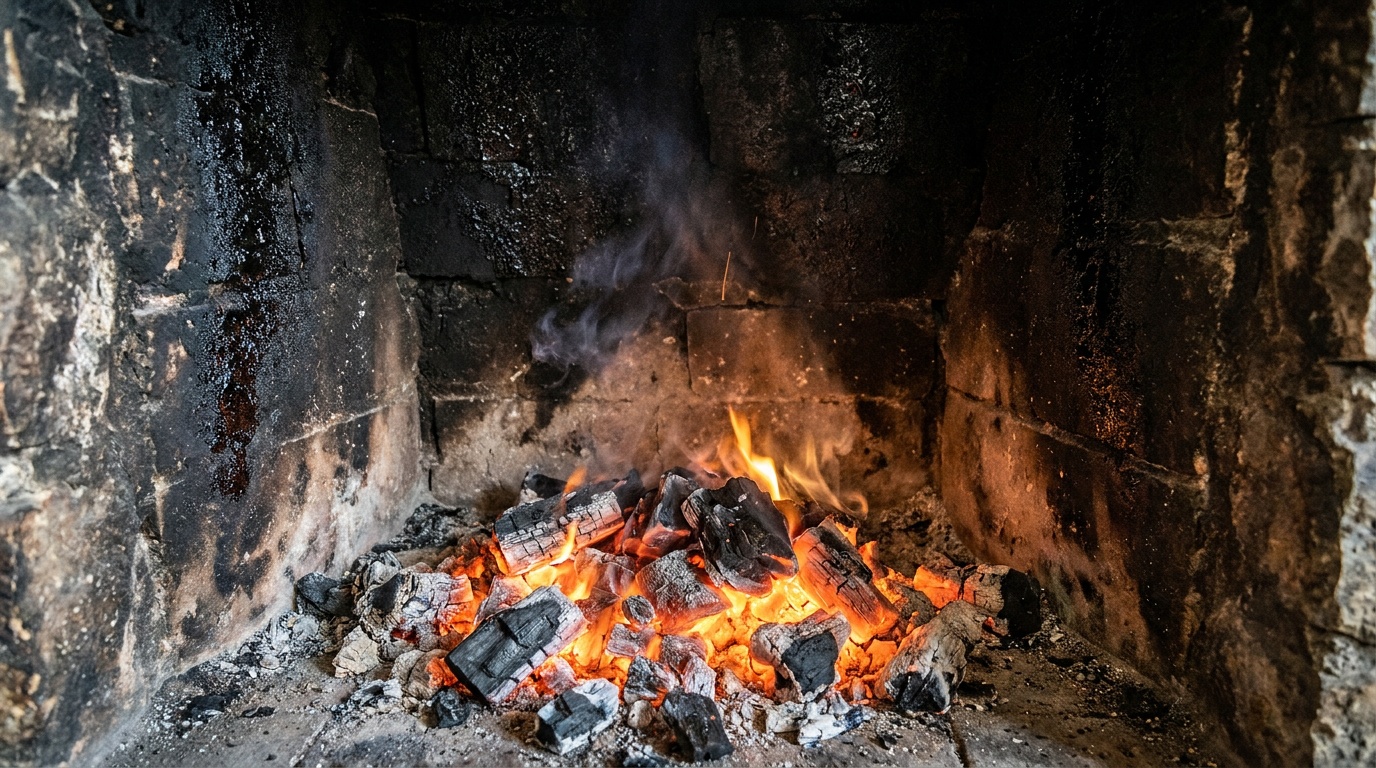
- Black, oily staining around the firebox opening: A telltale sign of creosote runoff or severe buildup.
- Visible damage to mortar or bricks: Crumbling mortar joints, spalled bricks, or white efflorescence (mineral deposits) on the exterior indicate moisture infiltration.
- Damaged chimney cap or crown: Visually inspect from the ground with binoculars. A cracked or missing cap allows water, animals, and debris inside.
- Animals in the chimney: Chirping, scratching, or rustling sounds—especially in spring—often indicate bird or raccoon nesting. Never light a fire if you suspect animal occupancy.
- Popping or cracking sounds during burning: These can signal creosote ignition—the beginning of a chimney fire. Extinguish the fire and call a sweep immediately.
- Difficulty starting or maintaining a fire: Poor draft can indicate blockages or structural issues requiring professional assessment.
Chimney Types: Maintenance Needs at a Glance
| Chimney/Appliance Type | Sweep Frequency | Primary Risk | Inspection Level | Avg. Annual Cost (2026) |
|---|---|---|---|---|
| Wood-burning fireplace | 1–3x per year | Creosote buildup, chimney fire | Level 1–2 | $150–$350 |
| Wood-burning stove/insert | 1–2x per year | Liner integrity, creosote | Level 1–2 | $175–$400 |
| Gas fireplace/furnace flue | Once per year | CO backdraft, blockages | Level 1 | $100–$250 |
| Oil furnace flue/chimney | Once per year | Soot/acid deposits, liner damage | Level 1–2 | $175–$350 |
| Pellet stove venting | Once per year | Ash accumulation, blockage | Level 1 | $100–$225 |
3 Common Chimney Challenges (and How to Overcome Them)
Challenge 1: Creosote Buildup Beyond Stage 1
Creosote is the unavoidable byproduct of burning wood. It progresses through three stages: Stage 1 is a light, dusty deposit easily brushed away; Stage 2 is a denser, flaky tar-like coating that requires more aggressive removal tools; Stage 3 is a glazed, rock-hard coating that is highly combustible and extremely difficult to remove.
The challenge: Many homeowners don’t realize they’ve reached Stage 2 or 3 until a professional sweep identifies it—by which point standard brushing won’t solve the problem.
The solution: For Stage 2, chemical treatments like Creosote Remover Liquid (CRL) or trisodium phosphate applications, combined with rotary loop systems, are effective. For Stage 3, professional chemical removers (like Poultice Creosote Remover) applied over multiple visits are the only non-destructive option. Prevention is far preferable: burn only well-seasoned wood with moisture content below 20%, maintain adequate draft by keeping fires hot, and don’t let fires smolder.
Challenge 2: Chimney Crown and Cap Deterioration
The chimney crown—the concrete or mortar cap at the very top of the chimney structure—is one of the most overlooked components, yet one of the most consequential. When it cracks (a common result of freeze-thaw cycles), water infiltrates the masonry, accelerating deterioration from the inside out. A damaged flue liner costs $2,000–$7,000 to replace; a repaired crown costs $200–$500.
The challenge: Crown damage is invisible from ground level and easy to dismiss.
The solution: Request that your sweep photograph the crown during every visit and provide a condition rating. Ask specifically whether a chimney crown sealer (such as CrownCoat or similar products) has been applied. These penetrating sealers can dramatically extend crown life and are a cost-effective preventive measure.
Challenge 3: Finding a Qualified, Trustworthy Sweep
The chimney service industry has a well-documented problem with unqualified operators and high-pressure upselling. In 2025, consumer protection agencies in several states issued warnings about fraudulent chimney companies that advertise extremely low inspection prices, then manufacture alarming (and often fabricated) defect findings to sell thousands of dollars in unnecessary repairs.
The solution: Always verify CSIA certification (Certified Chimney Sweep credential) or NFI (National Fireplace Institute) certification before booking. In 2026, both organizations maintain searchable online directories. Ask for references, check Google and Better Business Bureau reviews specifically for mentions of pushy upselling, and always get repair recommendations in writing before authorizing any additional work. A legitimate sweep will never pressure you into same-day repairs.
Chimney Fire Causes: By the Numbers
Understanding the distribution of chimney fire causes helps homeowners prioritize their maintenance efforts. The following data is drawn from NFPA and CSIA combined reporting for 2024–2025:
Primary Causes of Chimney Fires (% of reported incidents)
Source: NFPA & CSIA Combined Reporting, 2024–2025
The data tells a compelling story: creosote buildup alone accounts for nearly two-thirds of all chimney fires—a problem that is entirely preventable through regular professional sweeping and proper burning practices. Debris and animal blockages (the second largest category) are also fully preventable with an intact chimney cap and annual inspection.
How to Choose the Right Professional
Not all chimney sweeps are created equal. Here’s a practical checklist for evaluating service providers in your area:
- Verify CSIA or NFI certification: This is the minimum standard. Check the CSIA directory at csia.org or call the organization directly to confirm current certification status.
- Ask about insurance: Any professional working on your home should carry both general liability insurance and workers’ compensation coverage. Request proof before work begins.
- Request a written estimate: Reputable sweeps provide a written quote before starting. Be cautious of anyone who only provides verbal estimates or who adjusts pricing significantly once on-site.
- Look for camera inspection technology: For Level 2 inspections, the sweep should use a video camera system to inspect the flue interior. Ask to see the footage—a trustworthy professional welcomes this.
- Check for transparent pricing: In 2026, average sweep costs range from $150–$350 depending on region and complexity. Prices significantly below this range (e.g., $49 specials) are often bait-and-switch tactics.
- Read recent reviews carefully: Look specifically for mentions of professionalism, punctuality, transparency, and post-service follow-through.
Quick Scenario: A homeowner in Colorado receives a coupon in the mail for a “$59 chimney inspection special.” The sweep arrives, performs a brief visual check, and immediately identifies “critical” Stage 3 creosote requiring $3,800 in emergency repairs—refusing to leave without a deposit. This is a well-documented scam pattern. The homeowner should have refused, requested written documentation of findings with photographs, and obtained a second opinion from a CSIA-certified sweep. The follow-up inspection revealed mild Stage 1 creosote requiring a standard $220 cleaning—nothing more.
Frequently Asked Questions
Can I clean my chimney myself instead of hiring a professional?
Basic DIY chimney brushing is technically possible for a homeowner comfortable working on roofs with the right equipment—a properly sized chimney brush, fiberglass rods, and a HEPA vacuum are the essentials. However, DIY sweeping addresses only one component of what a professional service provides. Without the expertise to assess creosote staging, identify liner cracks, evaluate crown condition, or spot early structural deterioration, you could clean a chimney perfectly and still miss a dangerous defect. For routine Stage 1 creosote maintenance between professional visits, DIY brushing can be a useful supplement—but it should never replace an annual professional inspection. The liability calculus is simple: a professional inspection costs $150–$300; a chimney fire or CO incident can cost your home, your health, or your life.
How do I know if my chimney had a fire without my knowledge?
Surprisingly, many chimney fires are small, brief events that homeowners never notice—sometimes described as a low rumbling or slight vibration during a burn. The CSIA estimates that a significant portion of chimney fires go unreported because they self-extinguish before causing visible damage. Post-fire indicators include: puffy, honey-combed creosote (Stage 2/3 that has been heated); cracked, warped, or collapsed flue tiles; damaged or discolored chimney cap; and smoke or heat marks on exterior masonry above the roofline. If you suspect a past fire event—or purchased a home with an unknown service history—a Level 2 inspection with video scanning is essential before any use.
Does a gas fireplace really need annual sweeping if it doesn’t produce soot like wood?
Yes—and this is one of the most dangerous misconceptions in home maintenance. While gas appliances produce far less visible debris than wood-burning units, their flue systems are still vulnerable to blockages from animal nests, debris intrusion, spider webs (which can obstruct small-diameter gas vents), and structural deterioration. More critically, gas appliance flues are the primary pathway for carbon monoxide to safely exit your home. A partially blocked gas flue can redirect CO into living spaces with no visible warning signs whatsoever. The NFPA 211 standard explicitly includes gas venting systems in its annual inspection recommendation. The fact that you can’t see the problem is precisely why professional inspection matters most for gas systems.
Your Chimney Care Action Plan: Next Steps
You’ve now got the full picture—from understanding the real risks, to knowing exactly what professionals should be doing, to identifying the warning signs that demand immediate attention. The question isn’t whether chimney maintenance is important. It’s whether you’re going to act on that knowledge before the heating season catches you unprepared.
Here’s your practical roadmap for 2026 and beyond:
- Book your annual inspection now. If you haven’t had a professional sweep and inspection in the last 12 months, that’s your first call to make. Target a CSIA-certified sweep through csia.org’s directory. Aim for an August or September appointment to beat the autumn rush.
- Conduct a personal walk-around assessment. Using binoculars from ground level, examine your chimney crown, cap, and visible exterior masonry for obvious damage. Note any observations to share with your sweep.
- Evaluate your burning habits. If you’ve been burning green wood or softwood, transition to well-seasoned hardwood with a moisture content under 20%. Consider purchasing an inexpensive wood moisture meter—they retail for under $20 in 2026 and eliminate guesswork.
- Install or test CO detectors. Ensure you have working carbon monoxide detectors on every level of your home, within 15 feet of each sleeping area. Replace batteries and test monthly. Replace units older than 7 years.
- Create a maintenance file. Keep all written inspection reports, photographs, and repair receipts in a dedicated folder (physical or digital). This documentation is invaluable for future reference, home sale disclosures, and insurance purposes.
As smart home technology continues evolving through 2026 and 2027, new tools—including AI-assisted flue cameras and real-time draft monitoring sensors—are beginning to make their way into the professional sweep’s toolkit. These innovations will make inspections faster and more accurate, but they’ll never replace the fundamental need for regular professional attention. The chimney in your home is one of the oldest technologies in residential construction, and it still demands the same respect it always has.
Your home is your most significant investment. The fireplace is one of its most beloved features—and one of its most consequential safety systems. When did you last have yours professionally inspected? If you have to think hard to remember, you already have your answer.
Article reviewed by Hans Müller, Industrial Architecture & Concrete Restoration Specialist, on May 4, 2026