
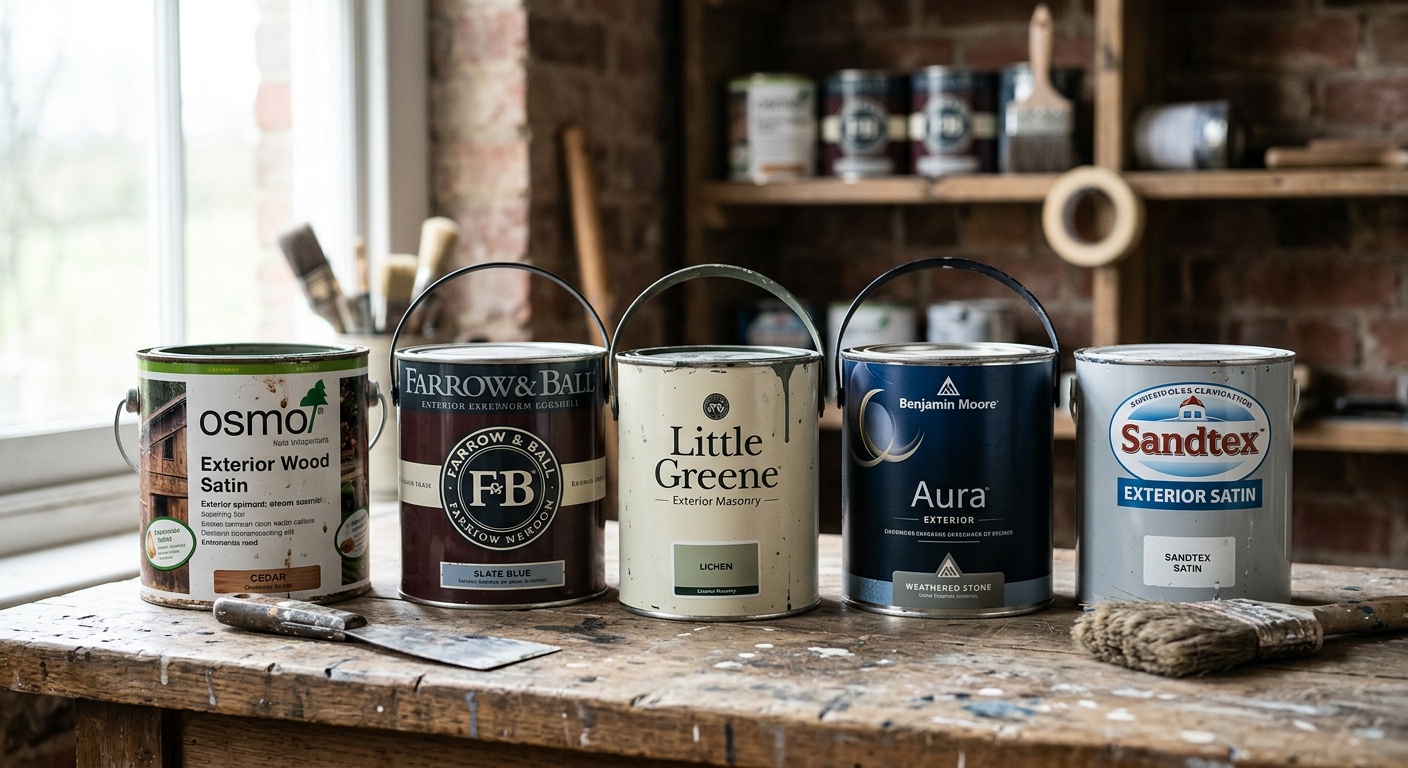
Best House Painting Supplies for Long-Lasting Exterior Results
Reading time: 14 minutes
Ever started an exterior paint job with high hopes, only to watch it peel, crack, or fade within a season or two? You’re not alone. Millions of homeowners make the same costly mistake every year — investing time and money into a project, only to see it deteriorate prematurely because of the wrong supplies. The truth is, exterior painting success is 80% preparation and material selection, and only 20% application technique.
In 2026, with paint technology advancing faster than ever and climate volatility pushing homes harder than previous decades, choosing the right supplies isn’t just a preference — it’s a strategic necessity. Whether you’re a first-time DIYer or a seasoned weekend warrior, this guide walks you through everything you need to get durable, professional-grade results that stand the test of time.
Table of Contents
- Why Supply Quality Defines Your Results
- Choosing the Right Exterior Paint
- Primers: The Foundation Nobody Talks About
- Brushes, Rollers, and Sprayers
- Surface Prep Tools You Can’t Skip
- Product Comparison: Top Picks for 2026
- Paint Durability by Product Type
- 3 Common Challenges and How to Beat Them
- Frequently Asked Questions
- Your Exterior Paint Project Roadmap
Why Supply Quality Defines Your Results
Here’s the straight talk: the cheapest supplies are rarely the most economical choice. A gallon of budget exterior paint might cost $18, but if it requires repainting in two years versus eight, you’ve actually spent four times more over that period — not counting labor. According to the Paint Quality Institute’s 2025 Homeowner Report, 67% of exterior paint failures traced back to inadequate primers, low-quality brushes, or bargain-bin paints that lacked sufficient binder content.
Think about this scenario: Sarah, a homeowner in coastal Virginia, repainted her home’s siding in 2023 using a value-brand latex paint she picked up on clearance. By late 2024, the south-facing walls were already showing chalking and color fade. In 2026, she repainted — this time investing in a 100% acrylic, weather-resistant formula. The difference in adhesion, sheen retention, and coverage was immediately apparent, even to her neighbors.
The lesson? Strategic investment in quality supplies pays dividends in longevity, curb appeal, and reduced maintenance cycles. Let’s break down exactly what those supplies are.
Choosing the Right Exterior Paint
100% Acrylic Latex: The 2026 Gold Standard
If you’re choosing between paint types in 2026, the answer is almost always 100% acrylic latex. Unlike oil-based paints (which are increasingly restricted under EPA VOC regulations updated in early 2025) or alkyd blends, full-acrylic formulas offer superior flexibility, allowing them to expand and contract with temperature swings without cracking. They also resist mildew, UV degradation, and moisture penetration far better than their counterparts.
Key features to look for on the label:
- High solids content (ideally 45% or above) — more pigment and binder means better coverage and durability
- Titanium dioxide pigment — the gold standard for opacity and UV resistance
- Self-priming formulas — useful for repaints over sound, clean surfaces, though not a substitute for bare-wood priming
- Low-VOC or zero-VOC certification — healthier application, especially in hot weather
Top picks in 2026:
- Sherwin-Williams Emerald Exterior — consistently rated #1 by pro painters for sheen retention and mildew resistance
- Benjamin Moore Aura Exterior — Color Lock technology minimizes fading; excellent for bold hues
- BEHR DYNASTY Exterior — strong mid-range performer with excellent scuff and stain resistance at a lower price point
Specialty Paints for Problem Surfaces
Not every surface is created equal. Masonry, stucco, previously-chalked siding, and bare wood all demand specialized formulas. Using the wrong type is one of the most common — and preventable — causes of early failure.
- Masonry and stucco: Look for elastomeric coatings. Brands like DRYLOK Masonry Waterproofer and Sherwin-Williams Loxon provide bridging capability that fills hairline cracks as they form over time.
- Bare wood: Oil-based primers under acrylic topcoats remain the preferred combo for raw cedar and redwood. The oil penetrates deeply, blocking tannin bleed that ruins water-based primers.
- Metal surfaces: Rust-inhibiting direct-to-metal (DTM) paints, like Rust-Oleum Professional or Benjamin Moore Impervo, are non-negotiable for gutters, railings, and metal siding.
Primers: The Foundation Nobody Talks About
If exterior paint is your armor, primer is the foundation it’s built on. Skipping or under-investing in primer is the single biggest mistake homeowners make — and it shows up within 12 to 24 months as peeling, bubbling, or adhesion failure.
When and Why to Prime
Primer is non-negotiable in these situations:
- Any bare wood, metal, or masonry surface
- Previously painted surfaces with significant chalking or gloss
- Surfaces that have been repaired with patching compounds
- When making a dramatic color change (dark to light or vice versa)
- High-humidity environments or coastal zones with salt air exposure
Pro Tip: In 2026, tinted primers are widely available and increasingly recommended. Ask your paint retailer to tint your primer to approximately 50-70% of your topcoat color. This dramatically reduces the number of topcoats needed and improves final color uniformity — a trick the pros have used for years that’s now standard practice at most paint stores.
Primer Types at a Glance
Choosing the right primer type depends on your substrate and project conditions:
- Water-based (latex) primers — fast-drying, easy cleanup, excellent for most repaint situations; products like Zinsser Bulls Eye 1-2-3 are workhorses
- Oil-based primers — superior penetration on porous or stained wood; slower to dry but unmatched for adhesion on difficult surfaces
- Shellac-based primers — the nuclear option for severe stains, smoke damage, or extreme bleed-through situations; Zinsser BIN is the industry leader
Brushes, Rollers, and Sprayers
Even the best paint in the world won’t perform properly if applied with the wrong tools. Your application equipment directly impacts finish quality, coverage uniformity, and how much paint you waste.
Brushes: Match Bristle to Paint Type
This is one of those details that separates good results from great ones. The rule is simple:
- Water-based (latex) paints → synthetic bristle brushes (nylon/polyester blend)
- Oil-based paints and primers → natural bristle brushes (China bristle)
For exterior trim and cutting-in, a 2.5-inch angled sash brush is the most versatile tool you can own. Look for brushes with flagged (split) bristle ends — they hold more paint and release it more smoothly. Purdy, Wooster, and Corona consistently lead quality rankings in 2026, with the Purdy XL Sprig and Wooster Shortcut being favorites among professional painters.
Rollers for Large Surface Coverage
For siding, walls, and large flat areas, a roller dramatically speeds up the job. Key considerations:
- Nap thickness: Smooth siding → 3/8-inch nap; rough wood or textured stucco → 3/4-inch to 1-inch nap
- Frame quality: A heavy-duty, cage-style frame prevents roller slip and maintains even pressure
- Extension poles: A telescoping pole (4 to 8 feet) is essential for upper stories and reduces ladder repositioning by up to 60%
Airless Sprayers: Worth the Investment?
For whole-house projects, an airless sprayer can cut application time by 40-60%. In 2026, entry-level models from Graco (the Magnum X5 and X7 remain bestsellers) and Titan have become more accessible to DIYers at the $300–$500 range. However, sprayers require meticulous masking, consistent technique, and cleanup discipline. They’re best for large, unobstructed surfaces like smooth board-and-batten or shingle siding.
Quick Scenario: Imagine you’re painting a 2,400 sq. ft. Colonial home with decorative trim details. Spraying the body saves hours; back-rolling immediately after ensures penetration and eliminates thin spots. The combination technique is what professionals use on premium projects.
Surface Prep Tools You Can’t Skip
Preparation is where long-lasting exterior paint jobs are won or lost. According to a 2025 study by the National Coatings Association, properly prepared surfaces extend paint life by an average of 3.2 years compared to minimally prepped surfaces — that’s a 40% improvement in longevity from prep work alone.
Pressure Washing
A pressure washer is your first and most important prep tool. It removes dirt, mildew, chalking, and loose paint — all of which destroy adhesion. For most residential exteriors:
- Use 1,500–2,500 PSI for wood siding (too high and you’ll raise the grain or force water behind clapboards)
- Use 2,500–3,500 PSI for masonry and concrete
- Always add a mildewcide cleaning solution to the wash water — brands like Jomax are highly effective
- Allow a minimum of 48-72 hours of dry time before painting (in 2026’s climate conditions, many pros now wait 96 hours in humid regions)
Scraping, Sanding, and Caulking
After washing, address mechanical prep:
- Carbide scrapers remove failing paint without gouging — the Hyde and Red Devil brands are consistent performers
- Oscillating sanders (or sanding sponges for trim) smooth edges and feather old paint
- Caulking gaps around windows, doors, and trim joints is critical — use a paintable, 50-year elastomeric caulk. DAP DynaFlex Ultra and GE Advanced Silicone 2 are leading choices in 2026 for their flex and UV resistance
- Wood filler and epoxy patching compounds like Bondo Wood Filler address rot-damaged areas before priming
Product Comparison: Top Exterior Painting Supplies for 2026
| Product | Category | Best For | Approx. Price (2026) | Durability Rating |
|---|---|---|---|---|
| Sherwin-Williams Emerald Exterior | Paint | All siding types, premium finish | $95–$110/gal | ⭐⭐⭐⭐⭐ |
| Zinsser Bulls Eye 1-2-3 Plus | Primer | Repaint situations, mixed surfaces | $38–$45/gal | ⭐⭐⭐⭐⭐ |
| Purdy XL Sprig 2.5″ Brush | Brush | Trim, cutting-in, detail work | $18–$22 | ⭐⭐⭐⭐⭐ |
| Graco Magnum X7 Sprayer | Sprayer | Large-area, fast application | $420–$460 | ⭐⭐⭐⭐ |
| DAP DynaFlex Ultra Caulk | Caulk/Sealant | Joints, windows, trim gaps | $8–$12/tube | ⭐⭐⭐⭐⭐ |
Paint Durability by Product Type (Average Years Before Recoat)
Based on 2025 field data from the Paint Quality Institute and independent contractor surveys across North America, here’s how different exterior paint categories compare in real-world durability:
*Data reflects properly prepared surfaces in temperate climate zones. Coastal, desert, or extreme cold environments may reduce these figures by 15–30%.
3 Common Challenges and How to Beat Them
Challenge 1: Peeling and Bubbling Within the First Year
This is the most reported exterior paint failure — and almost always preventable. Peeling happens when moisture is trapped under a paint film, when paint is applied over an incompatible surface, or when temperature conditions during application were outside acceptable ranges (most paints require 50°F–90°F ambient temperature and below 85% humidity).
Solution: Never paint in direct, hot afternoon sun on a surface that’s above 100°F. Use a surface thermometer (infrared models cost under $30 in 2026). Follow the shade around your house, painting surfaces in the morning after they’ve dried from dew. Always prime bare wood with an oil-based primer before applying latex topcoats.
Challenge 2: Lap Marks and Uneven Finish
Lap marks appear when paint dries before you connect your next stroke — common on hot, windy days or with fast-drying formulas. They’re particularly noticeable on smooth surfaces in raking light.
Solution: Work in manageable sections and maintain a wet edge at all times. Add a paint conditioner like Floetrol (for latex) or Penetrol (for oil-based) to extend open time without compromising durability. Floetrol, particularly in the 2026 updated formula, can increase open time by up to 35%, giving you significantly more working time in challenging conditions.
Challenge 3: Color Fade in UV-Intensive Climates
UV degradation is an accelerating concern in 2026, with solar intensity indices in the southern and western US running approximately 8% higher than 2015 averages due to atmospheric changes. Deep, saturated colors (reds, deep blues, greens) fade fastest because their pigments absorb more UV energy.
Solution: Choose paints with UV-absorbing additives specifically engineered for intense sun. Benjamin Moore Aura Exterior and Sherwin-Williams Emerald both include proprietary UV-blocking technology. For extremely sun-exposed elevations, consider a slightly lighter shade than your desired color — it will weather toward your target rather than away from it.
Frequently Asked Questions
How many gallons of exterior paint do I need for an average-sized home?
For a typical 2,000 sq. ft. two-story home, plan on 12–15 gallons of topcoat paint and 4–6 gallons of primer, assuming two coats of each. Premium paints with high solids content (like Sherwin-Williams Emerald) often cover 350–400 sq. ft. per gallon, while budget paints might cover only 250–300 sq. ft. Always calculate your wall surface area (perimeter × height, minus windows and doors) and divide by your paint’s stated coverage rate, then add 10–15% for waste and touch-ups. Most paint retailers offer free coverage calculators in-store and online in 2026.
Is it better to spray or brush-roll exterior paint?
Both methods can produce excellent results — the best choice depends on your surface, timeline, and experience level. Spraying is dramatically faster for large, open surfaces (20,000+ sq. ft. per day for a professional setup), but requires extensive masking of windows, doors, landscaping, and neighboring structures, plus technique consistency to avoid runs and thin spots. Brush-rolling is slower but provides superior mechanical adhesion because it works the paint into surface texture rather than atomizing it onto the surface. Many professionals use a spray-and-backroll technique — spraying for speed, immediately rolling to embed the paint. For DIYers, brush-rolling is generally recommended unless you have airless sprayer experience.
Do I really need to wait 72 hours after pressure washing before painting?
Yes — and in many 2026 climate conditions, 72 hours is actually a minimum. Moisture trapped within wood fibers or masonry is invisible to the eye but catastrophic to paint adhesion. Moisture meters (available at hardware stores for $20–$50) take the guesswork out: wood siding should read below 15% moisture content before painting, and ideally below 12%. Painting over moist substrate is the leading cause of premature peeling, according to the 2025 Professional Painting Contractors of America (PPCA) Annual Report. In humid southeastern climates or after prolonged rain, waiting 96 hours is not excessive — it’s professional practice.
Your Exterior Paint Project Roadmap: From First Brush to Final Coat
You now have the knowledge framework that separates a paint job that lasts two years from one that lasts twelve. The supplies you choose, the preparation you invest in, and the application discipline you maintain will compound into real, measurable results on your home’s value, protection, and visual impact. Here’s how to put it all into action:
- Audit your surface first: Walk your exterior and document every failing area — peeling, cracking, rot, gaps. Your prep plan flows from this inventory.
- Invest in primer properly: Buy the right primer for your substrate. Don’t use leftover interior primer or skip it entirely on bare surfaces. This single step protects your entire investment.
- Buy quality paint in the right quantity: Use a coverage calculator, purchase premium-grade 100% acrylic latex, and have it tinted at the store for best results.
- Assemble the right tools for your scope: Brushes and rollers for detail and texture; consider a rental sprayer for large, open areas if your project warrants it.
- Work with the weather, not against it: Check a 5-day forecast. Paint during dry, mild conditions. Avoid direct sun on hot afternoon surfaces.
In 2026 and beyond, exterior paint technology will continue advancing — self-cleaning coatings, thermochromic pigments, and antimicrobial additives are all moving from commercial applications toward residential availability by 2027–2028. The homeowners who build a foundation of excellent prep habits and quality supply knowledge will be best positioned to take advantage of these innovations when they arrive.
Your home is one of the largest investments of your life. Doesn’t it deserve paint supplies that match that commitment? Walk into your local paint store — or open your favorite retailer’s website — with this guide in hand. Ask questions, push for professional-grade recommendations, and resist the temptation to cut corners on primer or prep. The hours and dollars you invest upfront will multiply into years of protection, beauty, and peace of mind on every surface of your home’s exterior.
Article reviewed by Hans Müller, Industrial Architecture & Concrete Restoration Specialist, on July 15, 2026