
How to Improve Indoor Air Quality During High Humidity Months
Reading time: 12 minutes
You’ve closed all the windows to keep the summer heat out, but something still feels off. There’s a faint musty smell, your allergies are flaring, and you can’t quite put your finger on the cause. Sound familiar? During high humidity months — typically late spring through early fall in most climates — indoor air quality (IAQ) can deteriorate rapidly, creating an invisible health hazard right in the comfort of your own home.
Here’s the straight talk: most people focus on outdoor air quality while completely ignoring what’s happening inside their walls. In 2026, indoor air pollution ranks among the top five environmental health risks according to the World Health Organization, and humidity is one of the most underestimated contributors to that problem.
This guide is your practical roadmap to diagnosing, managing, and transforming your indoor air quality — even when the humidity outside is working against you.
Table of Contents
- Why Humidity Is the Hidden Air Quality Villain
- Signs Your Indoor Air Quality Is Suffering
- The Science Behind Humidity and Pollutants
- Proven Strategies to Improve IAQ
- Tools and Technologies Worth Investing In
- Comparing Common IAQ Solutions
- Real-World Scenarios: What Works
- Frequently Asked Questions
- Your Breathable Home: Immediate Action Plan
Why Humidity Is the Hidden Air Quality Villain
Humidity isn’t just about comfort — it’s a catalyst. When indoor relative humidity climbs above 60%, it creates near-perfect breeding conditions for mold spores, dust mites, bacteria, and volatile organic compounds (VOCs). According to the U.S. Environmental Protection Agency’s 2025 Indoor Environments Division report, homes in high-humidity regions see up to a 40% increase in biological pollutant concentration compared to drier climates during peak summer months.
The ideal indoor relative humidity range sits between 30% and 50%. Anything above that threshold triggers a cascade of air quality problems that compound over time. Think of humidity as the amplifier in your home’s ecosystem — it doesn’t create the problem alone, but it turns the volume up on everything else.
The Humidity-Pollutant Connection
When water vapor saturates your indoor air, it doesn’t sit idle. It attaches to surfaces, infiltrates building materials, and interacts with existing pollutants in complex ways. Dust mites, for instance, thrive at humidity levels above 50% and cannot survive below 40% — a fact that gives homeowners tremendous power if they understand how to harness it.
VOCs emitted from furniture, paints, cleaning products, and synthetic fabrics also off-gas more aggressively in warm, humid conditions. A 2024 study published in the Journal of Environmental Science & Technology found that formaldehyde emissions from composite wood furniture increased by up to 35% when ambient humidity rose above 65%. That’s the couch you’re sitting on and the shelving in your home office contributing to the problem.
Seasonal Patterns You Need to Know
High humidity months vary by geography, but for most of the continental United States, Southeast Asia, and coastal Europe, the problematic window runs from May through September. In tropical climates like Florida, Houston, or Bangkok, residents deal with elevated indoor humidity virtually year-round. Understanding your local seasonal pattern is the first step to proactive management rather than reactive damage control.
Signs Your Indoor Air Quality Is Suffering
Before you invest in solutions, you need to diagnose the problem accurately. Here are the most telling indicators that humidity is actively degrading your indoor air:
- Persistent musty or earthy odors — especially in basements, bathrooms, or closets
- Visible condensation on windows, pipes, or walls during warm months
- Allergy or asthma flare-ups that worsen at home but improve when you leave
- Peeling wallpaper or bubbling paint — signs of moisture infiltration in walls
- Increased respiratory symptoms among household members: coughing, sneezing, throat irritation
- Dark spots or discoloration on ceilings, walls, or grout lines in wet areas
- Wood floors that warp or buckle during summer months
Pro Tip: Purchase an inexpensive digital hygrometer (typically $10–$25 in 2026) and place it in multiple rooms. This single investment gives you real-time data that removes guesswork from your air quality assessment.
The Science Behind Humidity and Pollutants
Understanding the mechanism helps you make smarter decisions about where to focus your efforts. Indoor air quality problems during humid months generally fall into three categories: biological growth, chemical off-gassing, and particulate concentration.
Biological Growth: Mold and mildew colonies begin establishing within 24 to 48 hours on surfaces with sustained moisture exposure. By the time you see visible mold, colonies have already been releasing spores into your breathing air for days or weeks. Mycotoxins produced by certain mold strains — particularly Stachybotrys chartarum (black mold) — have been linked to neurological symptoms, chronic fatigue, and respiratory inflammation.
Chemical Off-Gassing: As noted above, heat and humidity accelerate VOC release. Products containing formaldehyde, benzene, toluene, and xylene become significantly more problematic in summer. Ironically, common household cleaning products designed to fight humidity-related mold often introduce their own VOC burden into the air.
Particulate Behavior: Humid air causes fine particles — including allergens, dust, and combustion byproducts — to absorb moisture and become heavier. While this can reduce some airborne particles temporarily, it also causes them to settle on surfaces and re-enter air circulation with movement. HVAC systems then redistribute these settled particles when activated, creating cyclical exposure.
Proven Strategies to Improve IAQ During Humid Months
This is where knowledge becomes action. Let’s move through the most impactful interventions, organized from foundational to advanced.
Control Moisture at the Source
The most effective strategy isn’t buying equipment — it’s behavioral and structural. Humidity enters your home through multiple pathways: infiltration through building envelope gaps, cooking, bathing, breathing, and activities like indoor drying of laundry. Addressing each source systematically yields more sustainable results than relying solely on mechanical remediation.
- Always use exhaust fans during cooking and showering — run them for at least 20 minutes after activities conclude
- Vent dryers directly outside — a gas dryer produces approximately 4 pints of water vapor per cycle
- Seal crawl spaces and basements with vapor barriers — up to 15% of a home’s humidity can originate from soil moisture beneath the foundation
- Fix leaks immediately — even a slow dripping pipe under a sink can raise localized humidity to mold-threshold levels within days
- Avoid indoor clothes drying during high-humidity months — it can add 2–5 pints of moisture to your indoor air per load
Strategic Ventilation Without Bringing More Humidity In
This is where many homeowners make a critical mistake. Opening windows to “air out” the house during humid summer days can backfire dramatically, importing hot, moisture-laden outdoor air. Instead, adopt strategic ventilation timing:
- Ventilate during early morning hours (5 AM–8 AM) when outdoor temperatures and dew points are lowest
- Use Heat Recovery Ventilators (HRVs) or Energy Recovery Ventilators (ERVs) — these bring in fresh air while removing excess moisture and retaining conditioned air temperature
- Create cross-ventilation pathways when outdoor dew points drop below 55°F (13°C)
- Keep interior doors open to promote air circulation and prevent moisture pockets from forming in stagnant spaces
Optimize Your HVAC System for Humidity Control
Your air conditioning system is also your most powerful dehumidifier — but only if it’s properly sized and maintained. An oversized AC unit is a surprisingly common IAQ problem: it cools the air quickly but short-cycles before completing the dehumidification process, leaving you with cool but still-humid indoor air.
Key HVAC maintenance steps for humidity season:
- Replace filters monthly during peak humidity months (use MERV 11–13 rated filters for optimal particle capture)
- Clean evaporator coils annually — dirty coils reduce moisture removal efficiency by up to 30%
- Ensure condensate drain lines are clear and flowing — blockages cause moisture to re-enter the air stream
- Consider adding a whole-home dehumidifier connected to your HVAC — standalone units from brands like Aprilaire or Santa Fe can process 70–120 pints per day
- Set your thermostat fan to “Auto” rather than “On” — continuous fan operation recirculates moisture from the condensate pan back into the air
Air Purification: Choosing the Right Technology
Not all air purifiers are created equal, and in 2026, the market has expanded significantly with new technologies. Here’s what actually works for humidity-related IAQ issues:
- HEPA filtration: Captures 99.97% of particles 0.3 microns and larger, including mold spores and dust mite fragments. Essential baseline technology.
- Activated carbon filters: Adsorb VOCs, odors, and chemical gases. Critical for addressing humidity-amplified off-gassing. Replace every 3–6 months.
- UV-C germicidal irradiation: Disrupts DNA of mold spores and bacteria passing through the unit. Most effective when combined with HEPA filtration.
- Bipolar ionization: Growing in commercial adoption in 2026, this technology charges particles to cluster them for easier filtration capture — but evidence for residential effectiveness remains mixed.
Avoid ozone generators marketed as air purifiers. While ozone does neutralize some VOCs, indoor ozone concentrations required for effectiveness exceed safe human exposure levels according to the California Air Resources Board’s 2025 guidelines.
Tools and Technologies Worth Investing In (2026)
The smart home technology space has made IAQ monitoring and management significantly more accessible in 2026. Here’s a prioritized investment framework based on budget and need:
Tier 1 — Foundation ($25–$150):
- Digital hygrometer/thermometer combo units (monitor humidity in each room)
- Portable HEPA air purifiers for bedrooms and living spaces
- Bathroom exhaust fan timers (ensure proper post-use ventilation automatically)
Tier 2 — Intermediate ($150–$600):
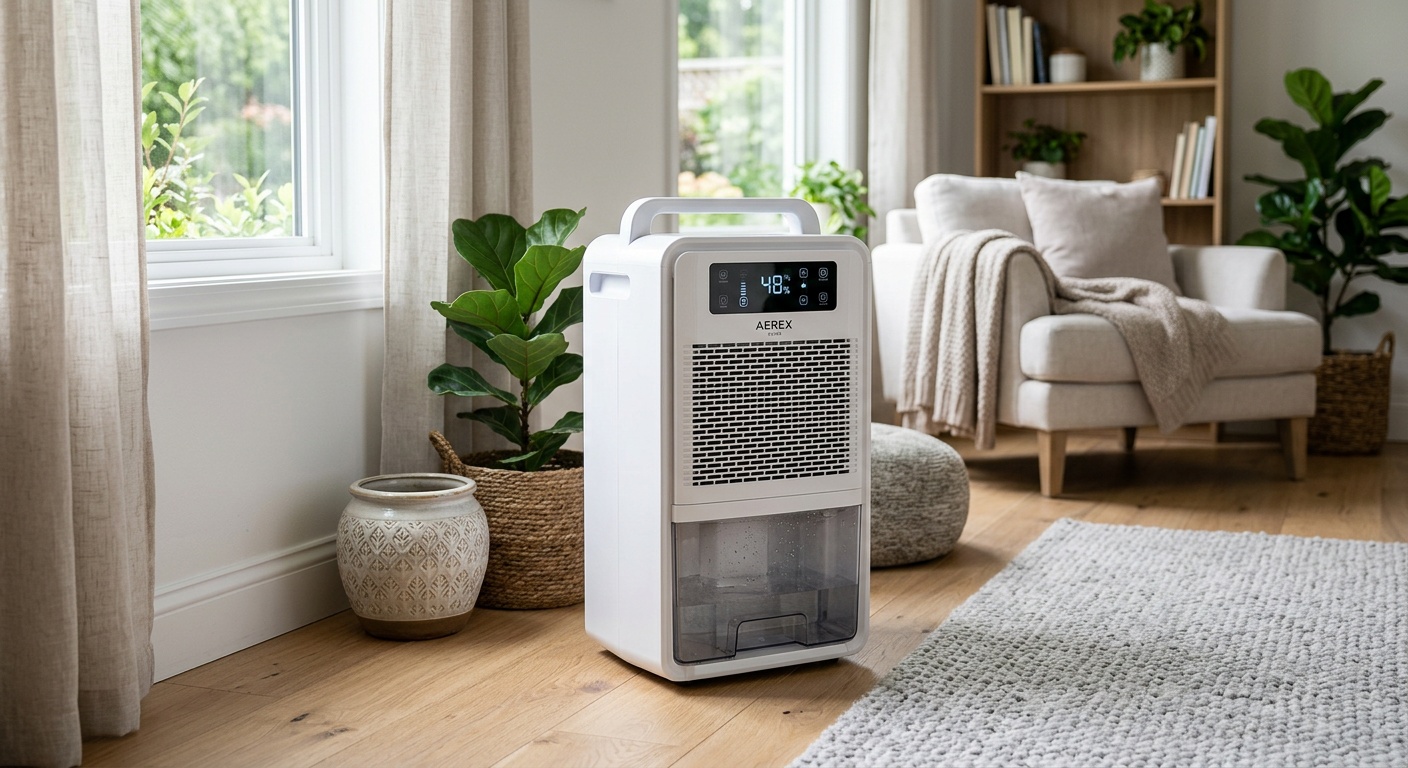
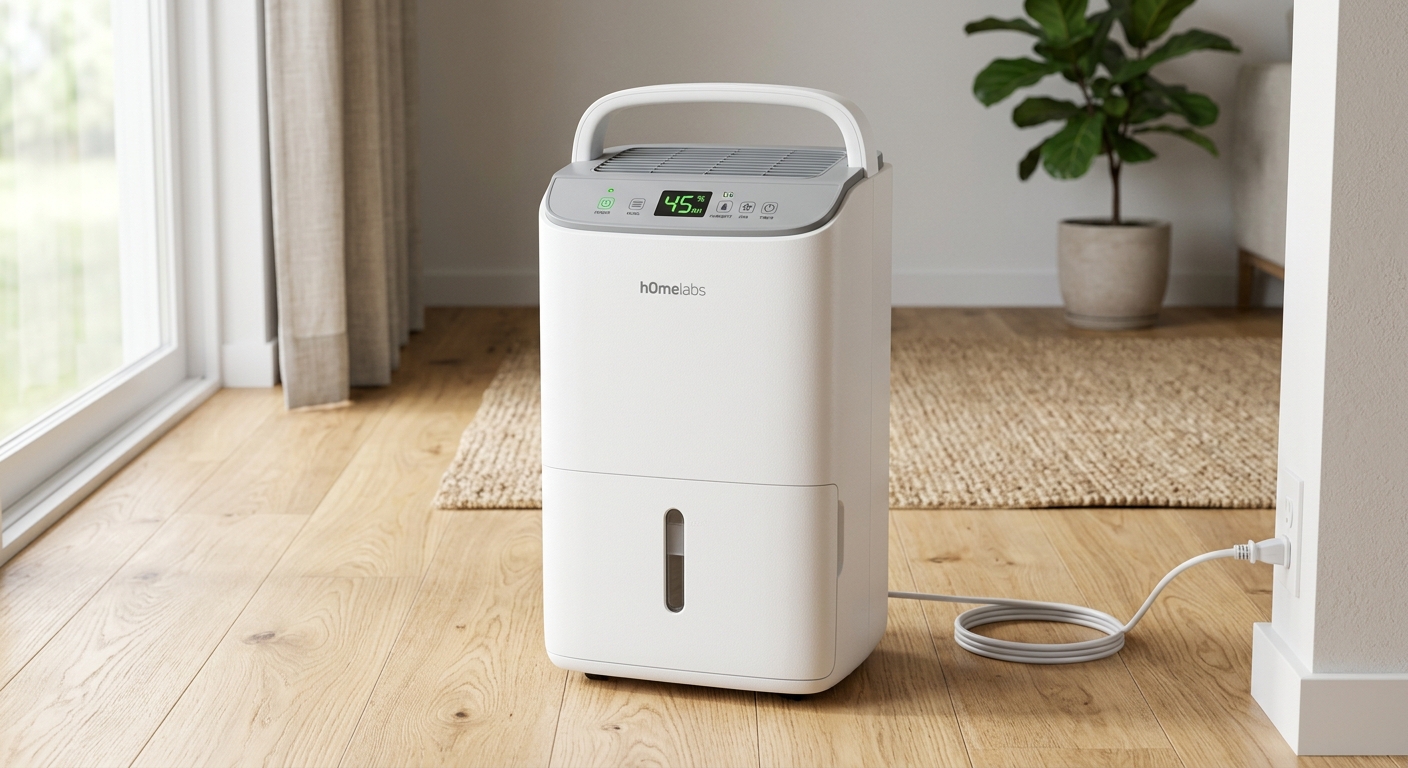
- Portable dehumidifiers with auto-drain (50–70 pint capacity for basements)
- Smart IAQ monitors (Airthings, Awair, or IQAir models with real-time VOC, CO₂, and humidity data)
- MERV 13 HVAC filters with quarterly replacement schedule
Tier 3 — Advanced ($600+):
- Whole-home ERV/HRV systems with humidity sensing
- Integrated whole-home dehumidifiers plumbed to drain
- UV-C in-duct air treatment systems
Comparing Common IAQ Solutions
Use this table to evaluate options based on your specific situation:
| Solution | Humidity Control | Particle Removal | VOC Reduction | Avg. Annual Cost (2026) |
|---|---|---|---|---|
| Portable Dehumidifier | Excellent | Minimal | None | $180–$350 |
| HEPA Air Purifier | None | Excellent | Moderate (with carbon) | $120–$280 |
| ERV/HRV Ventilation | Good | Moderate | Good | $400–$800 (installed) |
| HVAC Optimization | Very Good | Very Good | Moderate | $150–$300 (maintenance) |
| Indoor Plants (Strategic) | Minimal | Minimal | Low (marginal benefit) | $50–$200 |
Note: Indoor plants, despite popular belief, provide only marginal IAQ benefits at realistic home quantities. NASA’s original clean air study required dozens of plants per square meter to achieve measurable effects — far beyond typical home use. Don’t skip mechanical solutions in favor of greenery.
Humidity Impact on IAQ Factors — Visual Overview
Relative impact of high humidity on key IAQ pollutant categories
Source: Composite data derived from EPA Indoor Environments Division and WHO IAQ Guidelines, 2025.
Real-World Scenarios: What Works
Scenario 1: The Houston Townhome Challenge
Consider a family of four in a newer-construction townhome in Houston, Texas — one of North America’s most chronically humid metros. In summer 2025, they noticed their two children developing persistent cough and congestion symptoms each year from June through September. Their HVAC system was only three years old and seemingly well-maintained.
An IAQ audit revealed the root cause: their 2,200 sq. ft. home’s HVAC system was oversized by approximately 25%, causing it to short-cycle. Indoor humidity was consistently measuring 68–72% despite the AC running frequently. The solution involved installing a whole-home dehumidifier (Aprilaire 1850W) alongside their existing HVAC, recalibrating the system’s operation cycles, and replacing bathroom exhaust fans with timer-controlled units. Within six weeks, indoor humidity stabilized at 48–52%, and by September 2025, both children had significantly fewer respiratory symptoms. Total investment: approximately $1,800.
Scenario 2: The Pacific Northwest Basement Office
A remote-working professional in Portland, Oregon, converted their below-grade basement into a home office in early 2025. By July, they noticed concentration issues, fatigue, and a developing musty odor. A smart IAQ monitor revealed elevated CO₂ (above 1,200 ppm) and humidity consistently above 65% with VOC spikes each morning when they began work.
The combination of below-grade air infiltration, minimal ventilation, and off-gassing from new composite wood furniture created a compounding problem. The solution: a portable dehumidifier with continuous drain, a HEPA-carbon combination air purifier, a dedicated fresh air intake with an ERV unit, and allowing new furniture to off-gas in a ventilated space before bringing it indoors. CO₂ dropped to below 800 ppm, humidity to 44%, and productivity — subjectively — increased noticeably within weeks.
Frequently Asked Questions
What is the single most impactful thing I can do to improve IAQ during humid months?
If you can only take one action, prioritize controlling humidity directly. Use a dehumidifier or optimize your HVAC system to maintain indoor relative humidity between 40–50%. This single intervention reduces mold growth risk, suppresses dust mite populations, slows VOC off-gassing, and decreases bacterial activity simultaneously. No air purifier or filter system compensates for unchecked excess moisture in your home.
Are expensive smart IAQ monitors worth purchasing in 2026?
For most homeowners, a mid-range smart monitor ($150–$250) provides excellent value because it delivers real-time, room-specific data that removes guesswork from your IAQ management strategy. The Airthings View Plus and IQAir AirVisual Pro remain leading options in 2026, tracking humidity, CO₂, VOCs, PM2.5, and radon simultaneously. Budget-tier monitors below $50 typically measure only temperature and humidity, which is still useful but limits your diagnostic capability. If you’re experiencing unexplained health symptoms or managing asthma or allergy conditions in your household, the investment in a comprehensive monitor pays dividends quickly.
Can I use essential oil diffusers while trying to improve indoor air quality?
This is a nuanced question. Ultrasonic diffusers add moisture to the air — problematic in already-humid conditions. They also disperse VOCs from the essential oils themselves, which can trigger respiratory responses in sensitive individuals. During high-humidity months specifically, it’s advisable to minimize or eliminate diffuser use. Evaporative diffusers (reed-style) add zero moisture but still release VOCs. If aromatherapy is important to your household, limit use to brief periods in well-ventilated spaces and avoid diffusing near HVAC return air vents that would distribute compounds throughout the home.
Your Breathable Home: Immediate Action Plan
You now have the knowledge — the final step is turning it into a structured action plan you’ll actually execute. Here’s your 30-day roadmap to noticeably better indoor air quality this humid season:
- Week 1 — Measure: Place a hygrometer in your bedroom, living room, and basement. Document readings at different times of day. Identify which spaces consistently exceed 55% relative humidity. This is your priority list.
- Week 2 — Seal and Source-Control: Inspect and seal visible gaps around windows, doors, and pipe penetrations. Fix any leaks. Switch bathroom and kitchen exhaust fans to timer operation. Stop indoor clothes drying.
- Week 3 — Mechanical Intervention: Deploy a dehumidifier in your highest-humidity space. Schedule an HVAC maintenance visit to clean coils, clear condensate drains, and replace filters with MERV 11+ rated options. Verify your AC is properly sized.
- Week 4 — Purify and Monitor: Position a HEPA-carbon air purifier in your primary sleeping area. Review your hygrometer data trends. Adjust dehumidifier settings based on observed patterns. Order a smart IAQ monitor if your symptoms or data suggest complex pollutant problems beyond humidity.
Key Takeaways:
- Humidity is an amplifier — it doesn’t create IAQ problems alone, but it supercharges every existing pollutant in your home
- The 40–50% relative humidity sweet spot is your most powerful IAQ target — more impactful than any single filtration technology
- Mechanical solutions (dehumidifiers, HVAC maintenance, ERVs) outperform passive approaches in genuinely humid conditions
- Real data from affordable monitors beats assumptions — know your actual indoor conditions before spending on equipment
- IAQ improvements compound: when you reduce humidity, mold drops, dust mites drop, VOC off-gassing drops — multiple benefits from one intervention
As climate patterns continue shifting in 2026 and beyond, longer and more intense humid seasons are becoming the norm across broader geographic regions. What was once a seasonal inconvenience is increasingly a year-round management challenge for millions of households. The good news? The tools, knowledge, and technologies available today make proactive IAQ management genuinely achievable for any budget.
Here’s the question worth sitting with: The air you’re breathing right now, in your home, is either actively supporting your health or quietly undermining it. Which is it — and what’s the one action from this guide you’ll take before this weekend?
Article reviewed by Hans Müller, Industrial Architecture & Concrete Restoration Specialist, on June 8, 2026