
When to Clean Your Air Ducts: Signs, Frequency, and Benefits
Reading time: 12 minutes
Here’s a question most homeowners never think to ask: When did you last look inside your air ducts? If the answer is “never,” you’re far from alone—and you might be breathing the consequences every single day.
Air duct cleaning sits in that awkward category of home maintenance tasks that feel invisible until something goes wrong. Unlike a leaking faucet or a blown fuse, dirty ductwork rarely announces itself dramatically. It works quietly in the background, circulating dust, allergens, mold spores, and other contaminants through every room in your home—all while you assume your HVAC system is doing its job.
In 2026, with indoor air quality concerns reaching new levels of public awareness—partly driven by post-pandemic health consciousness and increasingly unpredictable wildfire smoke seasons—understanding when and how to clean your air ducts has never been more relevant. Let’s break it all down with clarity, precision, and practical guidance you can actually use.
Table of Contents
- Why Air Duct Cleanliness Actually Matters
- 7 Clear Signs Your Air Ducts Need Cleaning
- How Often Should You Clean Your Air Ducts?
- The Real Benefits of Clean Ductwork
- DIY vs. Professional Cleaning: What’s the Difference?
- Cost and Impact: A Data Snapshot
- 3 Common Challenges and How to Overcome Them
- Frequently Asked Questions
- Your Clean Air Action Plan
Why Air Duct Cleanliness Actually Matters
Let’s start with a number that should give you pause: the U.S. Environmental Protection Agency (EPA) has consistently found that indoor air can be two to five times more polluted than outdoor air—and in some cases, up to 100 times worse. Your HVAC system’s ductwork is one of the primary highways through which that pollution travels.
Think of your air duct system as the lungs of your home. Just as your lungs circulate oxygen to every organ, your ductwork circulates conditioned air to every room. When those pathways get clogged with years of accumulated debris, the entire system suffers—and so does everyone living inside it.
According to the National Air Duct Cleaners Association (NADCA), the average six-room home generates approximately 40 pounds of dust and allergens per year through normal living. A significant portion of that ends up in your duct system, recirculating through your air supply five to seven times per day.
The stakes have gotten higher in 2026. Wildfire smoke events in the western United States and Canada have intensified over the past several years, with 2025 seeing record-breaking particulate matter infiltration into residential HVAC systems across multiple states. Homeowners in affected regions are now reporting duct contamination at rates previously unseen, making routine duct inspections a genuine health priority rather than a “nice to have.”
7 Clear Signs Your Air Ducts Need Cleaning
Rather than guessing, let’s give you a practical diagnostic framework. Here are the seven most reliable indicators that your duct system is overdue for a cleaning.
Visual and Physical Indicators
1. Visible Dust Buildup Around Vents
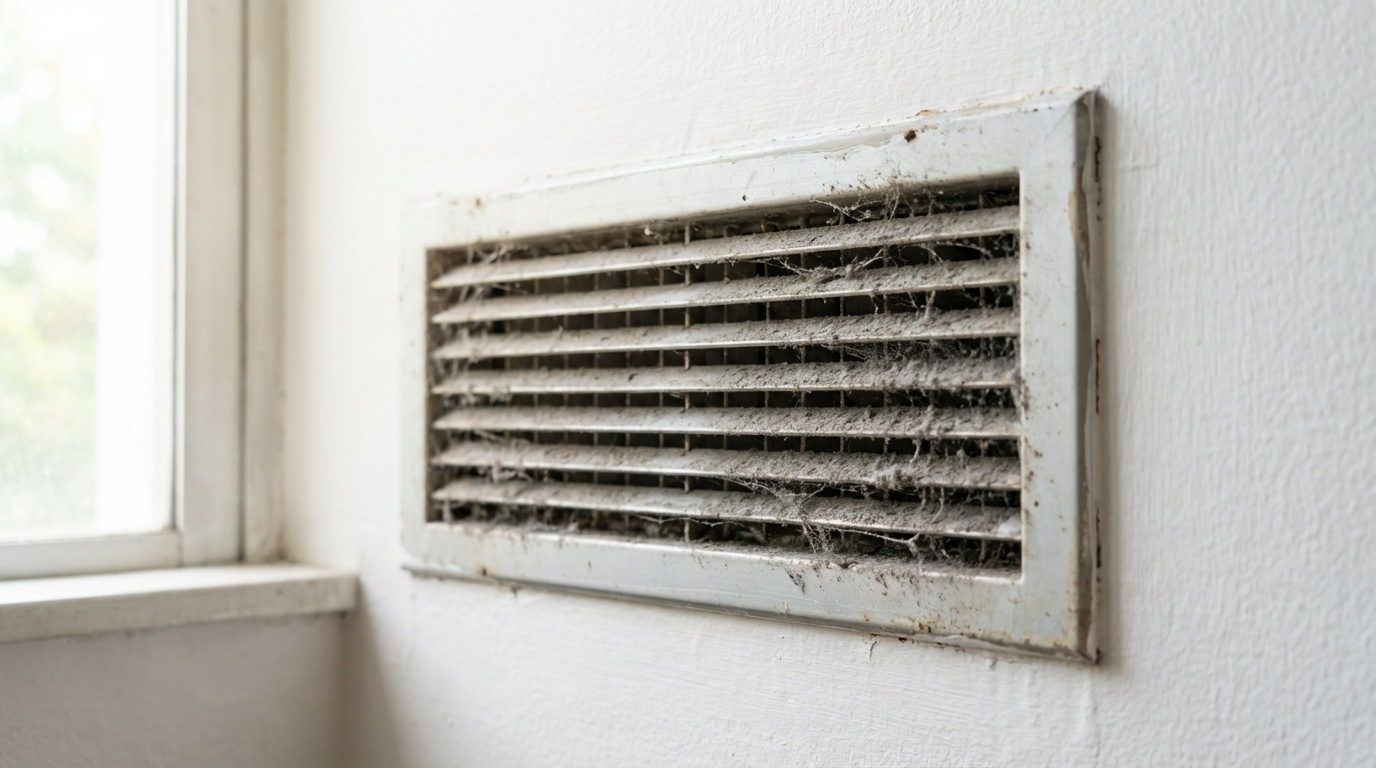
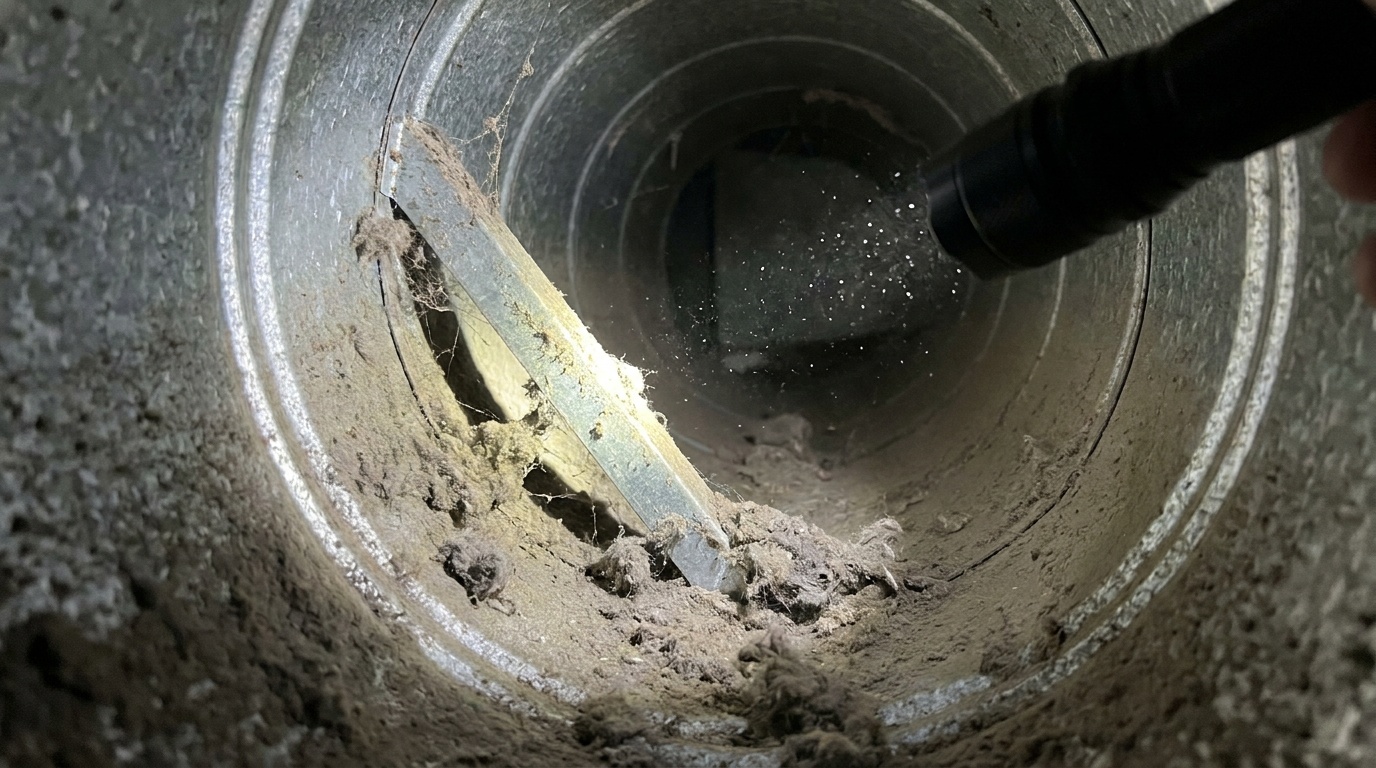
Take a flashlight and look directly into your supply and return air vents. If you can see a visible layer of gray or brown dust—especially if it’s thick enough to show texture—that’s a direct window into the condition of your entire duct system. Dusty vent covers themselves don’t always indicate dirty ducts, but interior dust accumulation is a reliable red flag.
2. Unexplained Increase in Dust Around the Home
Here’s a scenario many homeowners recognize: you dust your furniture on Monday, and by Wednesday it looks like you haven’t cleaned in weeks. When dust accumulates unusually fast—particularly on horizontal surfaces near vents—your ductwork is likely the culprit. The system is essentially redistributing its accumulated debris throughout your living spaces every time it cycles on.
3. Mold Growth Near Vents or Inside the System
Mold is one of the most urgent reasons to schedule a professional duct cleaning immediately. If you notice dark spots or musty odors near air registers, there’s a strong possibility that mold has established itself somewhere in the duct network. This is especially common in humid climates or homes that have experienced water damage. Don’t delay action on this one—mold spores circulating through your air supply pose serious respiratory risks.
Performance and Health-Related Indicators
4. Persistent Musty or Stale Odors When the System Runs
Turn your HVAC on and stand near a vent. Does the air smell stale, musty, or vaguely unpleasant? That odor is typically biological in origin—mold, mildew, or decomposing organic matter (yes, sometimes that includes pest remnants) in the duct system. A clean duct system should deliver neutral, odor-free air.
5. Worsening Allergy or Asthma Symptoms Indoors
Consider this real-world example: A family in Phoenix, Arizona noticed in early 2025 that their daughter’s asthma attacks had tripled in frequency despite no changes to her medication or outdoor activity. An HVAC inspection revealed significant accumulations of dust mite debris, pet dander, and fine particulate matter from the previous year’s wildfire season—all concentrated in their ductwork. After a professional cleaning, her symptoms returned to baseline within six weeks.
If household members experience disproportionate allergy or respiratory symptoms that improve when they leave the home, dirty ductwork deserves serious investigation.
6. Inconsistent Airflow Between Rooms
Walk through your home while the HVAC system is running. Are some rooms noticeably stuffy while others feel comfortable? Significant blockages in duct branches can restrict airflow to specific zones, creating uneven temperature distribution. While this can have other causes (like duct leaks or HVAC sizing issues), debris accumulation is a common culprit that often gets overlooked.
7. Recent Renovation or Construction Work
If you’ve completed any major renovation—even with protective measures in place—construction dust, drywall particles, and debris almost certainly infiltrated your duct system. Fine construction particulates are notoriously difficult to contain and can settle deep within ductwork. Most HVAC professionals recommend a full duct cleaning after any significant renovation project, regardless of the home’s age.
How Often Should You Clean Your Air Ducts?
The honest answer? It depends—but here’s the framework that eliminates the guesswork.
The Standard Recommendation: Every 3 to 5 Years
The NADCA and most HVAC industry professionals recommend that residential air ducts be inspected and cleaned every three to five years under typical conditions. This assumes a standard single-family home with no unusual contamination factors, no pets, no smokers, and residents without significant respiratory conditions.
However, “typical conditions” describes fewer homes than the industry assumes. Consider how many households have at least one of these factors: pets, smokers, young children (who generate more biological debris), homes in dusty or wildfire-prone regions, or occupants with allergies or asthma. Once you factor in even one of these variables, the recommended frequency shifts significantly.
Accelerated Cleaning Schedules: Who Needs Them?
The following scenarios typically warrant cleaning every one to three years:
- Pet owners: One dog or cat can introduce remarkable volumes of dander, hair, and tracked-in debris into your duct system annually. Homes with multiple pets should lean toward annual inspections.
- Allergy and asthma households: Reduced threshold for acceptable contaminant levels means more frequent cleaning pays dividends in health outcomes.
- Smokers in the home: Tobacco residue coats duct surfaces and contributes to persistent odors that circulate continuously until professionally removed.
- Homes in wildfire-affected regions: Following any significant smoke event in 2025 or 2026, duct inspections are strongly advisable, particularly for homes with older HVAC filtration systems.
- Older homes (pre-1990): Duct systems in aging homes may have never been cleaned and can harbor decades of accumulated contaminants, along with potential asbestos-containing insulation materials requiring specialized handling.
- Post-water damage: Any flooding or significant moisture intrusion near ductwork requires immediate inspection and likely cleaning to prevent mold establishment.
Here’s a practical approach many HVAC professionals recommend: schedule an annual duct inspection (distinct from a full cleaning) to assess current conditions. A qualified technician can examine the system with video inspection equipment and give you data-driven guidance on whether cleaning is warranted rather than guessing.
The Real Benefits of Clean Ductwork
Let’s go beyond the surface-level talking points and look at what the data actually shows.
Improved Indoor Air Quality
This is the headline benefit, and the evidence supporting it is substantial. A 2024 study published in the Journal of Environmental Health tracked particulate matter concentrations in 200 households before and after professional duct cleaning. Results showed an average 37% reduction in airborne particulate matter within 72 hours of cleaning, with the most dramatic improvements in homes that hadn’t been cleaned in five or more years.
HVAC System Efficiency and Longevity
Dirty ductwork forces your HVAC system to work harder. When airflow is restricted by debris accumulation, the system runs longer cycles to achieve target temperatures, consuming more energy and accelerating wear on mechanical components. The Department of Energy estimates that HVAC systems operating with significantly restricted airflow can use 20 to 40% more energy than clean, properly maintained systems.
Reduced Energy Bills
In practical terms, that efficiency gain translates directly to your utility bills. For a typical American household spending approximately $1,800 annually on heating and cooling in 2026 (reflecting current energy costs), even a 15% efficiency improvement represents $270 per year in savings—often exceeding the cost of a professional duct cleaning within the first year or two.
Extended HVAC Equipment Life
HVAC systems are expensive. A full system replacement in 2026 averages between $7,000 and $15,000 depending on the size and complexity of the installation. Regular duct cleaning, as part of a comprehensive maintenance strategy, can extend system life by several years—a return on investment that dwarfs the cost of routine cleaning services.
Odor Elimination
Persistent household odors that seem impossible to eliminate with surface cleaning alone often originate in ductwork. Post-renovation dust, cooking odors absorbed into debris, pet smells, and tobacco residue all get locked into duct accumulations and recirculate indefinitely. A thorough cleaning provides a genuine fresh start for indoor air quality.
DIY vs. Professional Cleaning: What’s the Difference?
| Factor | DIY Cleaning | Professional Cleaning |
|---|---|---|
| Depth of Cleaning | Surface-level only (visible vent areas) | Full system including main trunk lines |
| Equipment Used | Standard vacuum, brush kit | Industrial HEPA vacuums, rotary brushes, video inspection |
| Mold/Pest Detection | Unlikely to detect | Video inspection reveals hidden issues |
| Cost (2026 Average) | $30–$100 (supplies) | $350–$800 for average home |
| Time Required | 2–4 hours | 3–6 hours (professional crew) |
The practical takeaway: DIY cleaning of vent covers and the immediately accessible portions of duct openings is a worthwhile regular maintenance habit—do it every six months when you change your air filters. But genuine deep cleaning of the full duct system requires professional equipment and expertise that simply cannot be replicated with consumer tools. The distinction matters because superficial cleaning of accessible areas can create a false sense of security while deeper contamination persists untouched.
Cost and Impact: A Data Snapshot
Here’s a visual representation of air quality improvement percentages reported after professional duct cleaning in different home scenarios, based on aggregated data from NADCA member companies in 2025:
Air Quality Improvement After Professional Duct Cleaning (by Home Type)
Source: NADCA Member Aggregated Data, 2025. Percentages represent reduction in measured airborne particulates.
3 Common Challenges and How to Overcome Them
Challenge 1: Identifying Legitimate vs. Scam Duct Cleaning Services
The duct cleaning industry has a well-documented problem with predatory pricing and service fraud. A common scam involves companies advertising suspiciously low prices ($49–$99 “whole-house specials”) as bait, then arriving and using high-pressure sales tactics to upsell unnecessary services or claiming to find contamination that doesn’t exist.
How to overcome it: Always hire NADCA-certified companies, which require technicians to meet specific training and equipment standards. Request before-and-after video footage from inside the ducts as proof of work completed. Get at least two or three quotes for comparison—legitimate whole-house cleanings in 2026 typically range from $350 to $800 depending on system size and complexity. Any quote dramatically below this range warrants skepticism.
Challenge 2: Determining Whether Cleaning Is Actually Necessary
The EPA itself notes that duct cleaning is not always necessary and that evidence of its benefits is mixed for standard homes without specific contamination issues. This creates genuine uncertainty for homeowners trying to make sound decisions.
How to overcome it: Invest in a standalone inspection (typically $100–$150) before committing to a full cleaning. A reputable technician using video inspection equipment can show you actual conditions inside your ductwork. This data-driven approach removes guesswork and ensures you’re spending money on cleaning only when conditions genuinely warrant it—rather than on a schedule-based assumption.
Challenge 3: Maintaining Clean Ducts After Professional Service
Many homeowners invest in professional duct cleaning and then watch their air quality degrade back to previous levels within a year or two because they haven’t addressed the root causes of contamination.
How to overcome it: Think of duct cleaning as one component of a comprehensive IAQ strategy, not a one-time fix. Pair your professional cleaning with upgraded HVAC filtration (MERV-11 or higher filters are the 2026 standard recommendation for most homes), regular filter changes every 60–90 days, and attention to moisture control to prevent mold recurrence. Sealing duct leaks during the cleaning process also dramatically slows recontamination by preventing unconditioned air—laden with outdoor particulates—from infiltrating the system.
Frequently Asked Questions
Does air duct cleaning actually improve health outcomes, or is it mostly marketing?
The honest answer is nuanced. For homes without specific contamination issues—no mold, no pest infestations, no significant debris accumulation—the health benefits of routine duct cleaning are not definitively proven by current research. However, for households with confirmed mold growth, post-construction debris, significant allergen accumulation (particularly pet dander and wildfire particulates), or occupants with respiratory conditions, the evidence for measurable air quality improvement is considerably stronger. The EPA recommends cleaning when you have documented evidence of contamination rather than as automatic routine maintenance. The key is making informed, inspection-based decisions rather than either dismissing the service entirely or accepting it as universally necessary.
How long does a professional duct cleaning take, and what should I expect during the process?
A legitimate professional duct cleaning for an average-sized home (1,500–2,500 square feet) typically takes between three and six hours. The process involves technicians connecting large industrial HEPA vacuum equipment to your duct system to create negative pressure, then systematically agitating and extracting debris from each duct branch using rotary brushes and compressed air tools. You should expect some noise and minor disruption, but reputable companies protect your home’s surfaces and furniture during the process. Afterward, request documentation—ideally before-and-after video footage—confirming the work was completed thoroughly. If a company claims to complete a whole-house cleaning in under 60 minutes, treat that as a red flag.
Can I clean my own air ducts, or do I need a professional?
You can perform meaningful partial maintenance yourself: remove and clean vent covers regularly, use a vacuum with a HEPA filter to clean accessible duct openings up to a foot or two deep, and change your HVAC filters religiously every 60–90 days. These habits genuinely reduce debris accumulation between professional cleanings. However, the full duct system—including main supply and return trunk lines that run through walls, floors, and ceilings—cannot be effectively cleaned with consumer equipment. Industrial HEPA vacuums used by professionals operate at significantly higher suction capacity than any consumer unit, and the rotary brush systems that dislodge compacted debris from duct walls are simply not available to DIY users. Use self-maintenance as a complement to, not a replacement for, periodic professional service.
Your Clean Air Action Plan
You now have a complete framework for one of home maintenance’s most overlooked priorities. Let’s turn that knowledge into a concrete, actionable plan you can start implementing today.
Here’s your step-by-step roadmap:
- Do a visual assessment this week. Grab a flashlight and inspect three to five vent covers in your home—both supply and return registers. If you see visible interior dust accumulation, photograph it. This gives you a baseline and real data to share with any HVAC professional you consult.
- Evaluate your risk factors honestly. Do you have pets? Allergies? Have you completed renovations recently? Were you in a wildfire-affected region in 2025 or early 2026? Each “yes” moves your cleaning timeline forward. If you have two or more risk factors, schedule a professional inspection within the next 30 days.
- Upgrade your filtration now. Regardless of where you are in the cleaning cycle, switching to a MERV-11 or MERV-13 filter makes an immediate difference in airborne contaminant capture. Check that your HVAC system is rated for higher MERV filters before upgrading—some older systems require lower resistance filters to maintain adequate airflow.
- Vet your service provider carefully. When you’re ready for a professional cleaning, verify NADCA certification, request video inspection documentation, and get at least two competitive quotes. Don’t be rushed by promotional pricing or high-pressure tactics.
- Set up a maintenance calendar. After your cleaning, schedule filter changes as recurring reminders every 60–90 days, annual duct inspections, and full cleaning appointments based on your specific household risk profile—typically every one to three years for higher-risk homes, three to five years for standard conditions.
The broader trend here is significant: in 2026, indoor air quality has moved from a niche concern to a mainstream health priority, driven by climate-related air quality events, increased time spent at home, and growing research connecting airborne pollutants to long-term health outcomes. Duct maintenance is one of the most direct levers you have to control what you breathe every day.
The question worth sitting with: If you knew with certainty that the air circulating through your home contained elevated levels of allergens, mold spores, or fine particulate matter, what would you do differently starting tomorrow? The answer to that question is your real action plan—and the steps above are how you get there.
Article reviewed by Hans Müller, Industrial Architecture & Concrete Restoration Specialist, on May 4, 2026