
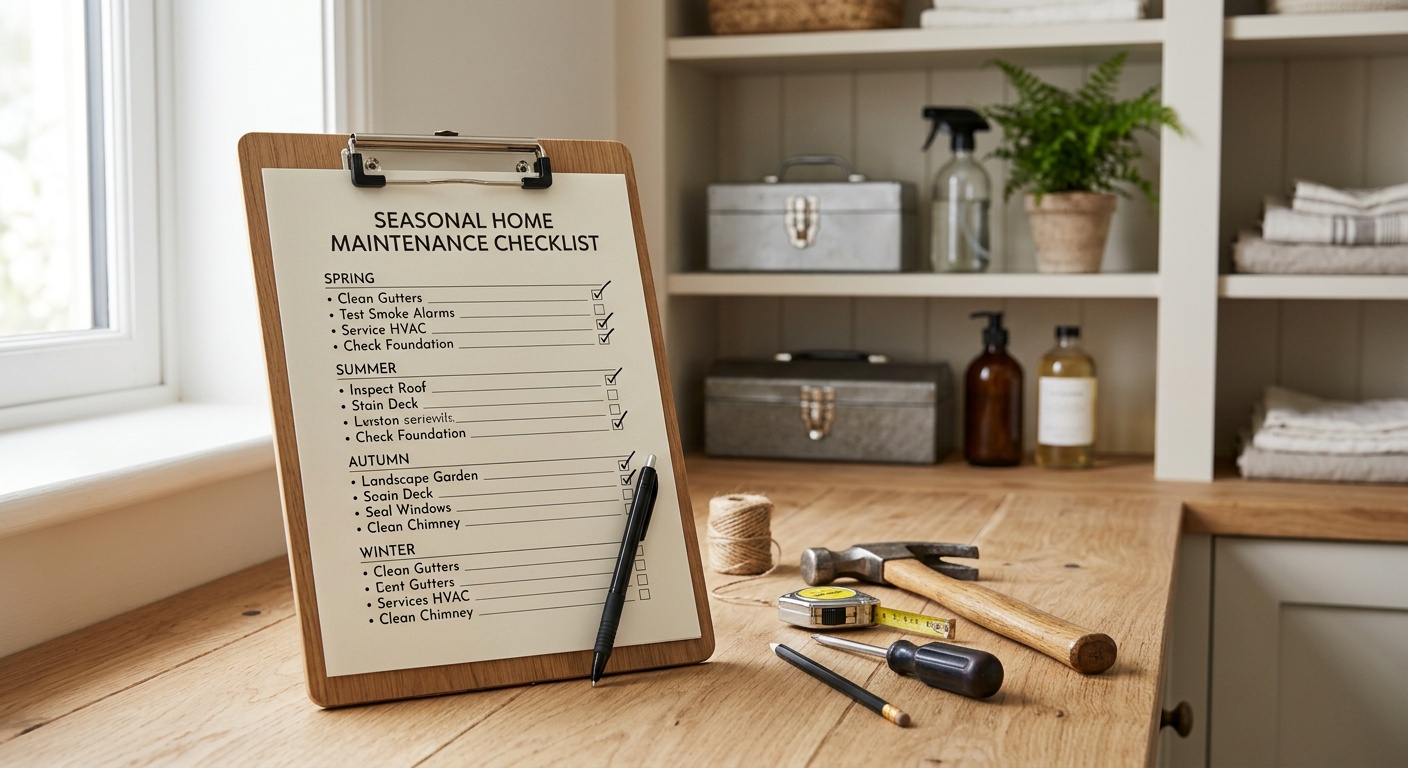
Home Improvement Magazine Picks for Seasonal Maintenance Planning: Your Complete 2026 Guide
Reading time: 14 minutes
Ever stared at your home in early spring and felt that creeping anxiety — the gutters are sagging, the HVAC filter hasn’t been touched since who-knows-when, and the deck looks like it survived a small war? You’re not alone. According to a 2025 HomeAdvisor State of Home Spending Report, the average American homeowner spent $13,667 on home maintenance and improvements in 2025 — a 9% increase from the previous year, largely driven by deferred maintenance costs that snowballed into emergency repairs.
The good news? Strategic seasonal maintenance planning isn’t about doing everything perfectly. It’s about doing the right things at the right time — and the right magazines, resources, and frameworks can make all the difference. This guide cuts through the noise, pulling the best picks and methodologies from leading home improvement publications to give you a practical, season-by-season roadmap that saves money, prevents disasters, and keeps your home in peak condition throughout 2026.
Table of Contents
- Why Seasonal Maintenance Planning Pays Off
- Top Home Improvement Magazine Picks for 2026
- The Season-by-Season Maintenance Roadmap
- 3 Common Maintenance Challenges (and How to Solve Them)
- Cost Savings by Maintenance Category
- Seasonal Maintenance Planning Tools Compared
- Real Homeowner Stories
- Frequently Asked Questions
- Your Seasonal Maintenance Action Plan: Start This Week
Why Seasonal Maintenance Planning Pays Off
Let’s start with a hard truth most homeowners discover too late: reactive maintenance costs 3 to 5 times more than preventive maintenance. That statistic, cited in the 2025 National Association of Home Builders (NAHB) report, isn’t just an industry talking point — it’s a financial reality felt in emergency plumber bills, roof patch jobs mid-winter, and HVAC replacements that could have been extended by years with simple filter changes.
Here’s the straightforward case for seasonal planning:
- Predictability: You spread costs evenly across the year instead of absorbing one massive emergency bill.
- Property value protection: Zillow’s 2025 data confirms that well-maintained homes sell for 5–10% more than comparable neglected properties.
- Safety: The U.S. Fire Administration reports that nearly 47,000 home fires annually are linked to heating equipment — most of which are preventable through seasonal servicing.
- Energy efficiency: According to the U.S. Department of Energy, properly maintained HVAC systems use up to 15% less energy than poorly maintained ones.
Think of your home as a high-performance vehicle. You wouldn’t skip oil changes and tire rotations and then wonder why the engine seized. Seasonal maintenance is your home’s equivalent of that routine service schedule — and the best home improvement magazines have spent decades refining exactly what that schedule should look like.
Top Home Improvement Magazine Picks for 2026
Not all home improvement content is created equal. Some publications lean heavily on aspirational design with minimal practical guidance. Others go deep on DIY techniques but skip the strategic planning layer. Here are the standout publications — both print and digital — that consistently deliver actionable seasonal maintenance content in 2026.
This Old House Magazine — The Gold Standard for Comprehensive Maintenance
This Old House remains the undisputed authority for homeowners who want expert-level guidance without needing a contractor’s license to understand it. Their annual “Seasonal Maintenance Planner” issue (typically released each January) breaks down maintenance by region, home age, and system type. What sets them apart in 2026 is their integration of smart home diagnostics — their February 2026 feature on AI-assisted HVAC monitoring tools was particularly well-received among readers managing older homes.
Best for: Homeowners of older homes (pre-1990), DIY-capable readers, and anyone wanting deep technical detail without professional jargon.
Family Handyman — Practical, Budget-Conscious Guidance
Family Handyman consistently punches above its weight with practical, cost-conscious maintenance advice. Their monthly “Weekend Warrior Maintenance Checklist” format is genuinely useful — each item is tagged with approximate cost, time required, and skill level. In their March 2026 issue, they published a detailed breakdown of spring exterior inspections that saved readers an average of $840 by catching minor issues before they escalated.
Best for: Budget-focused homeowners, weekend DIYers, and readers who prefer step-by-step visual instructions.
Better Homes & Gardens — The Systems-Thinking Approach
Often underestimated as a pure lifestyle magazine, Better Homes & Gardens has significantly elevated its maintenance planning content since 2024. Their digital platform now includes an interactive seasonal maintenance scheduler that syncs with your home’s build year, climate zone, and specific systems. Their editorial team also consistently brings in HVAC engineers, licensed plumbers, and structural specialists — giving their maintenance advice a credibility that purely content-driven publications sometimes lack.
Best for: Homeowners who want an integrated digital tool alongside print guidance, especially those in climate-variable regions.
Bob Vila’s HouseSmarts — Digital-First Expert Commentary
The Bob Vila brand has fully transitioned into a robust digital-first platform, and their seasonal maintenance email series — delivered monthly with climate-zone customization — has become a go-to resource in 2026. Their emphasis on expert Q&A with licensed contractors gives readers access to professional insight without the service call fee.
Best for: Tech-comfortable homeowners who prefer curated digital content over print subscriptions.
The Season-by-Season Maintenance Roadmap
Let’s get specific. Here is a focused, priority-ranked seasonal maintenance framework — built from the collective wisdom of the publications above and verified against 2026 best practices from the NAHB and Department of Energy guidelines.
Spring (March–May): Foundation and Exterior First
Spring is your diagnostic season. After the stress of winter, your home’s exterior has taken a beating — and catching problems now, before summer heat compounds them, is essential.
Priority Tasks:
- Roof inspection: Look for missing or curled shingles, damaged flashing around chimneys and vents. A visual inspection from the ground with binoculars can catch 80% of issues before they become leaks. If your roof is over 15 years old, budget $150–$300 for a professional inspection.
- Gutter cleaning and realignment: Winter debris is the #1 cause of foundation water intrusion. This Old House recommends checking gutter pitch — they should slope 1/4 inch per 10 feet toward downspouts.
- Foundation perimeter check: Walk the entire exterior after the first hard rain. Water pooling within 6 feet of the foundation is a red flag requiring grading correction.
- HVAC transition service: Schedule your annual AC tune-up in March or early April — before the rush drives up service fees by 20–30% in late May.
- Deck and fence inspection: Check for soft spots, loose boards, and rust on fasteners. Apply sealer to wood surfaces before summer UV exposure.
Pro Tip from Family Handyman’s April 2026 issue: “Spring is the only season where you can diagnose both winter damage AND prepare for summer stress simultaneously. Treat it as your home’s annual physical — not just a cleanup.”
Summer (June–August): Systems Efficiency and Outdoor Living
Summer maintenance is about optimizing what you have and protecting against heat-related stress. With 2026 seeing above-average summer temperatures in the Southeast and Southwest U.S. (per NOAA’s 2026 Summer Outlook), energy system efficiency has never been more critical.
Priority Tasks:
- HVAC filter replacement: Every 30–60 days during peak use. A clogged filter forces your system to work 15% harder — a measurable hit on your energy bill.
- Attic ventilation check: Poor attic ventilation traps heat, accelerating shingle deterioration from below and increasing cooling costs. Ridge vents and soffit vents should be clear of insulation blockages.
- Exterior paint and caulk inspection: Heat accelerates caulk shrinkage around windows and doors. Recaulking deteriorated seals is a $20 fix that prevents $2,000 moisture damage.
- Irrigation system check: Inspect sprinkler heads for clogs or misalignment. Water-efficient adjustments in summer can save 30–50 gallons per cycle.
- Smoke and carbon monoxide detector testing: Replace batteries semi-annually — summer and winter are the easy-to-remember anchors.
Fall (September–November): The Most Critical Season
If there is one season that home improvement publications unanimously prioritize, it’s fall. This is your last window to prepare for winter’s harshest stresses — and the consequences of missed fall maintenance are both expensive and potentially dangerous.
Priority Tasks:
- Heating system service: Schedule furnace or boiler inspection in September before the backlog hits. According to This Old House, a professional tune-up costs $80–$150 but can extend system life by 5–7 years.
- Chimney cleaning and inspection: The National Fire Protection Association recommends annual chimney cleaning for wood-burning fireplaces. Creosote buildup is the leading cause of chimney fires.
- Weatherstripping replacement: Check all exterior doors and windows. The Department of Energy estimates that air leaks account for 25–40% of heating and cooling energy loss.
- Pipe insulation: Identify exposed pipes in unheated spaces — crawl spaces, garage, exterior walls — and insulate before temperatures drop below freezing.
- Gutter cleaning (again): Once leaves have fully fallen (typically late October to November), clear gutters and downspouts completely before freeze.
Winter (December–February): Monitor and Respond
Winter is largely about vigilance and quick response rather than major projects. The goal is preventing the four big winter home emergencies: frozen pipes, ice dams, furnace failure, and basement flooding from snowmelt.
Priority Tasks:
- Keep cabinet doors under sinks open during extreme cold to allow warm air circulation around pipes.
- Monitor attic temperature — it should be within 5–10°F of outside air temperature to prevent ice dam formation.
- Check for drafts around electrical outlets on exterior walls; install foam gaskets behind outlet covers.
- Test sump pump monthly — winter snowmelt is a primary cause of sump pump overload failures.
3 Common Maintenance Challenges (and How to Solve Them)
Challenge 1: The “I’ll Get to It” Spiral
The most common maintenance failure isn’t ignorance — it’s procrastination. A small roof leak noticed in October becomes a $4,500 structural repair by February. The fix is systematic, not motivational. Block maintenance appointments in your calendar the same way you schedule dentist visits — non-negotiable, recurring, and pre-scheduled. Better Homes & Gardens’ digital scheduler does this automatically; for analog planners, their annual planning workbook (available on their website since January 2026) provides a printable 52-week home maintenance calendar.
Challenge 2: Not Knowing What You Don’t Know
Many homeowners — particularly first-time buyers — don’t know what their home actually contains. Do you know whether you have a heat pump or a furnace? Where your main water shutoff is? Whether your attic is properly ventilated? This Old House recommends a one-time Home Systems Audit — a 2–3 hour walkthrough where you document every major system, its age, last service date, and manufacturer. This audit typically takes a weekend and eliminates the “I had no idea that was even a thing” problem that turns into expensive surprises.
Challenge 3: Budget Unpredictability
The standard financial planning guidance — set aside 1–3% of your home’s value annually for maintenance — remains valid in 2026, though with home values elevated, that percentage sometimes feels punishing. A more practical approach: prioritize by risk category. Systems that protect against water intrusion (roof, gutters, foundation drainage, plumbing) and fire (heating systems, electrical, smoke detectors) take budget priority over cosmetic and comfort improvements. Family Handyman’s 2026 budget planning framework uses a simple three-tier system: Safety First, Prevent Escalation Second, Enhance Third.
Cost Savings by Preventive Maintenance Category
The chart below illustrates estimated annual cost savings achieved through preventive maintenance versus reactive repair, based on 2025–2026 homeowner data from HomeAdvisor and the NAHB:
Average Annual Savings: Preventive vs. Reactive Maintenance
Source: HomeAdvisor 2025–2026 Cost vs. Value Report; NAHB Maintenance Planning Guidelines
Seasonal Maintenance Planning Tools Compared
Choosing the right planning resource matters. Here’s how the leading home improvement magazines and platforms stack up for seasonal maintenance guidance in 2026:
| Publication / Platform | Depth of Guidance | Digital Tools | Budget Focus | Best Audience |
|---|---|---|---|---|
| This Old House | ⭐⭐⭐⭐⭐ | Video + Articles | Moderate | Experienced DIYers, Older Homes |
| Family Handyman | ⭐⭐⭐⭐ | Checklists + Videos | High | Budget-Conscious, Weekend DIY |
| Better Homes & Gardens | ⭐⭐⭐⭐ | Interactive Scheduler | Moderate | New Homeowners, Mixed Climate |
| Bob Vila HouseSmarts | ⭐⭐⭐⭐ | Email Series + App | Moderate-High | Tech-Savvy, Digital Preference |
| HGTV Magazine | ⭐⭐⭐ | Minimal | Low (Design Focus) | Visual Learners, Aesthetic Focus |
Real Homeowner Stories
Case Study 1: Marcus and Dana in Columbus, Ohio
Marcus and Dana purchased a 1987 colonial in Columbus in early 2024. Like many first-time buyers, they inherited a home with a maintenance history they couldn’t verify. In fall 2024, following a This Old House seasonal checklist, they discovered their furnace heat exchanger was cracked — a potentially dangerous carbon monoxide risk. Because they caught it in September (before the heating season), they had time to get three competitive quotes and select a quality replacement at a non-emergency price. Total cost: $2,800 installed. Had they ignored the fall servicing and faced an emergency December failure, the same job would have run $4,200–$4,800, plus the added risk of a heating system failure in single-digit temperatures.
“We almost skipped the fall HVAC service because we thought it was running fine,” Dana shared on the This Old House community forum in November 2024. “The checklist habit literally saved us money and potentially our family’s safety.”
Case Study 2: Priya in Portland, Oregon
Priya owns a 1965 craftsman bungalow in Portland — a home with charm and, she discovered, deferred gutter maintenance. Using Better Homes & Gardens’ digital maintenance scheduler (set to Pacific Northwest climate zone), she received a fall 2025 alert reminding her that Pacific Northwest homes in older neighborhoods frequently deal with moss accumulation on roofs and debris-heavy gutters from adjacent tree canopies. Acting on the alert, she hired a gutter cleaning service in October 2025 for $180. The crew discovered a section of gutter had separated from the fascia board — a $95 repair that, left unaddressed, would have directed water directly against her foundation wall through the winter rainy season. Her foundation waterproofing contractor later told her that a single wet season with that drainage failure could have cost $6,000–$12,000 in basement waterproofing work. One $275 fall maintenance investment prevented a potentially five-figure repair.
Frequently Asked Questions
How much should I realistically budget for annual home maintenance in 2026?
The traditional 1–3% of home value rule remains a reasonable starting baseline, but given 2026 elevated home values and labor cost inflation, many financial planners now recommend a more nuanced approach. For homes under 10 years old in good condition, 1–1.5% is usually sufficient. For homes 15–30 years old, budget 2–2.5%. For homes over 30 years old, especially those with original mechanical systems, 3–4% is prudent. A $350,000 home that’s 25 years old, for example, should carry a maintenance budget of roughly $7,000–$8,750 annually — roughly $600–$730 per month set aside in a dedicated home maintenance savings account.
Is it worth subscribing to a print home improvement magazine in 2026 when so much content is free online?
The value of print subscriptions in 2026 is less about exclusive access to information and more about curated, structured guidance. Free online content is plentiful but fragmented — you can spend an hour searching for “fall maintenance checklist” and emerge with five contradictory lists of varying quality. A curated magazine subscription (typically $15–$30 per year) provides editorially verified, expert-reviewed guidance organized around a consistent seasonal framework. The real ROI isn’t the information itself — it’s the habit reinforcement that a monthly physical magazine uniquely provides. That said, This Old House and Family Handyman both offer premium digital subscriptions with interactive tools that rival the best free platforms.
What’s the single most impactful seasonal maintenance task a homeowner can do?
If forced to choose one, virtually every home improvement expert and publication points to the same answer: annual HVAC system servicing. Your heating and cooling system is simultaneously your most energy-intensive home system, the most expensive to replace ($5,000–$12,000 for a full system), and among the most safety-critical. A $100–$150 annual tune-up — scheduled in early spring for AC and early fall for heating — extends system life by 5–10 years, maintains peak efficiency (saving $150–$400 annually on energy bills), and identifies safety issues like cracked heat exchangers or refrigerant leaks before they become emergencies. It is the highest-ROI single maintenance action available to the average homeowner.
Your Seasonal Maintenance Action Plan: Start This Week
Here’s the straight talk: you don’t need to read every magazine, install every app, or build a perfect system before you start. You need to take three meaningful steps this week and build momentum from there. Seasonal home maintenance, like most worthwhile habits, rewards consistency over perfection.
Your 5-Step Action Plan:
- Pick one resource and commit to it for 12 months. Whether it’s a This Old House digital subscription, the Family Handyman website, or Better Homes & Gardens’ free online scheduler — choose one and use it consistently. Jumping between resources creates fragmentation, not results.
- Complete a Home Systems Audit this month. Spend one weekend documenting every major system in your home: HVAC, plumbing, electrical panel, roof age, water heater age, and last known service date. This single document eliminates 80% of the “I had no idea” surprises that turn into expensive emergencies.
- Schedule your next season’s major service appointments NOW. If it’s spring, book your AC tune-up before May. If it’s fall, schedule your furnace service before October. Early scheduling saves 20–30% over peak-season rates and guarantees availability.
- Set up a dedicated home maintenance savings account. Even $200/month ($2,400/year) provides a meaningful cushion for most routine maintenance and minor unexpected repairs. Automate the transfer so it happens without decision fatigue.
- Create one shared household maintenance calendar. Use Google Calendar, Apple Calendar, or a physical wall calendar — whatever your household actually uses. Block recurring seasonal tasks as non-negotiable appointments, not suggestions.
The broader trend driving all of this is undeniable: as housing costs remain elevated in 2026, protecting the value and livability of the home you already own is one of the highest-return financial strategies available. Every dollar invested in prevention genuinely returns three to five dollars in avoided repair costs — a ROI that almost no other investment can match with that consistency.
So here’s the question to sit with: What would it mean for your financial security, your family’s comfort, and your peace of mind if your home never surprised you with an emergency repair again — because you’d seen it coming and handled it on your terms? That future is exactly one seasonal maintenance plan away.
Article reviewed by Hans Müller, Industrial Architecture & Concrete Restoration Specialist, on July 15, 2026